
Meeting Audio Goes Array: Ceiling Mics and AI Noise Control
When a meeting room is hard to hear, the problem is often not the speaker but the capture end. Speakers near the device come through loud while remote voices stay quiet, and glass walls and furniture create reverberation; simply adding more microphones does not fix this. The upgrade direction for meeting-room audio over the past two years is clear: array beamforming works together with AI noise reduction, echo cancellation and de-reverberation, ceiling mics gradually replace tabletop units, and captured audio serves both human listening and speech transcription. Teams building meeting spaces should assess room size, seating layout and acoustic conditions first, then decide on array form and algorithm capability.
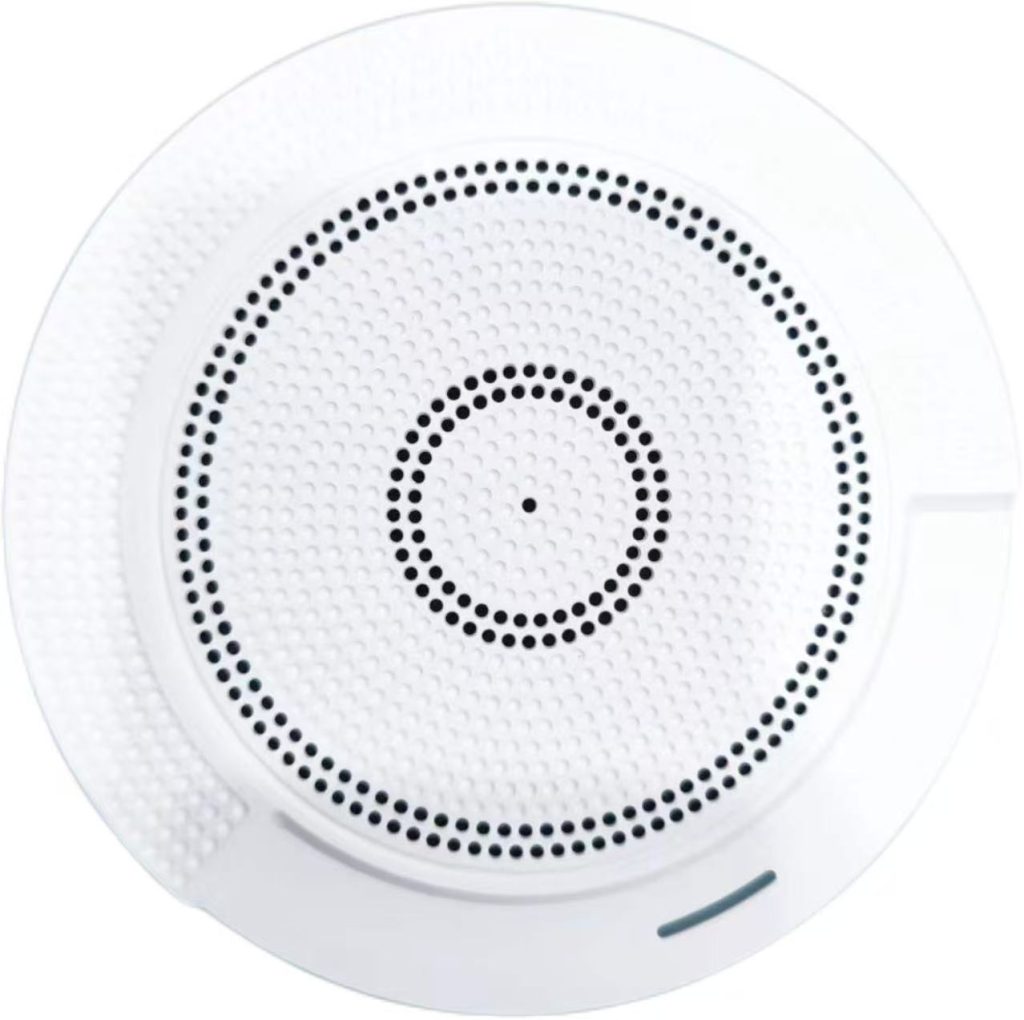
From 3A processing to neural-network acoustic models
Traditional meeting audio relies on 3A signal processing: acoustic echo cancellation (AEC), automatic gain control (AGC) and noise suppression (ANS). Newer schemes move to deep-learning acoustic models that separate speech from air conditioning, keyboards, paper rustle and background noise, reduce echo residue during double-talk, and distinguish speakers by voiceprint to raise transcription accuracy. The processing chain usually splits into two outputs: one for human listening and one dedicated to ASR transcription, making meeting minutes easier to generate. Beamforming focuses capture along the speaking direction, while sound-source localization can pair with visual tracking to reduce dependence on a fixed seating layout.
| Form | Deployment traits | Best-fit space |
|---|---|---|
| Ceiling array mic | Concealed overhead install, wide coverage | Mid-to-large meeting rooms and fixed interview areas |
| Tabletop pickup | Placed at table center, flexible to deploy, lower cost | Small meeting rooms and interview tables |
| Distant extension mics | Main unit chains extension mics to reach deeper into the room | Long tables or deep, larger spaces |
Capture, playback and room acoustics must be planned together
Array count, pickup distance and coverage angle should match room area and seating layout; reflections from glass walls and hard ceilings need algorithmic de-reverberation and echo control to compensate. Many new products place capture and playback in one design to avoid the two interfering. Before deployment, running an on-site test against actual ceiling height, seat count and wall materials is more reliable than relying on the rated pickup radius in a spec sheet; in open-plan and connected spaces, crosstalk and interference from nearby meetings need extra attention. Algorithm capability keeps improving with firmware updates, so check whether the device supports later algorithm upgrades, to avoid being locked into fixed processing once the hardware is in place.
In concrete equipment support, for spaces needing fixed coverage such as meeting rooms, classrooms or fixed interview areas, the Yuehangyi QD01-YTW Ceiling Microphone Array follows a ceiling-mounted route, with on-site testing first based on install height and coverage; for interview tables, small rooms and scenarios that need role-based recording, the Yuehangyi HY01-LX Desktop Meeting Audio Unit is easier to place flexibly; underneath long-range pickup, sound-source localization and acoustic detection, the On-Device AI Audio Full-Stack Solution covers voice interaction and acoustic event detection, serving as an algorithm and chain reference for custom audio hardware.
The criteria for judging meeting audio are shifting: in the past signal-to-noise ratio, frequency response and pickup radius mattered most; today speech completeness, speaker separation and transcription usability carry more weight. Equipment selection should not just stack microphone count, but evaluate room acoustics, array layout and algorithm processing as one system. Running an on-site listen and coverage test before choosing a ceiling or tabletop form makes a stable, reusable meeting experience easier to achieve.
Comments
No comments yet. Be the first to comment.