
Keeping AI Local: On-Premise AI NAS and Compute-Storage Nodes
Whether internal documents, R&D material and customer data can be fed directly into a cloud large model is where many small and mid-sized companies and R&D teams get stuck. Concerns over data sensitivity, ongoing API fees and offline availability are driving a rise in a class of local device: storage, virtualization and local inference compute combined in one machine, running a private knowledge base and local large model inside the office without data leaving the premises. These "compute-storage integrated" local AI nodes are moving from a hobbyist setup toward standard equipment small teams can actually deploy.
Why keep AI local
Cloud AI approach
- Easy to call, elastic compute, strong model capability
- Data must be uploaded, raising privacy and compliance concerns
- Pay-per-call pricing accumulates as a long-term cost
Local private node
- Model, files and conversations stay on device and run offline
- One-time hardware investment, no recurring API subscription
- Inherits existing folder permissions to control internal access
Local deployment does not require a team to build its own server room. Solutions aimed at small teams, creative studios and R&D departments usually combine file archiving, knowledge-base retrieval and local inference in one multi-bay device: documents land in local storage, local embedding supports semantic retrieval, and relevant material is fed to the on-device model to generate answers. Permissions continue the access control of existing folders to prevent unauthorized internal access; when connectivity is needed, a cloud model can still be added as an optional supplement.
What to check on a compute-storage integrated node
Beyond compute and bays, network throughput, container or virtualization support, expansion path and long-term firmware maintenance should be assessed together. Model versions and application stacks iterate quickly, so the device needs some upgrade headroom rather than ending up as an ordinary network drive. Domestic controller and edge-chip solutions are also entering this category, improving local compute-storage devices on cost and supply autonomy.
On the implementation path, a local knowledge base usually moves in three steps: first consolidate scattered documents, spreadsheets and material into a unified directory with permission tiers, then build a local vector index for text and images, and finally connect an on-device model for Q&A and retrieval. Small teams whose material is mainly documents and drawings do not demand heavy GPU compute; larger parameter models or simultaneous multi-channel multimedia call for higher-spec inference. Deployment does not have to happen all at once: start with file archiving and retrieval, then layer on local Q&A, reducing the risk of a one-time investment.
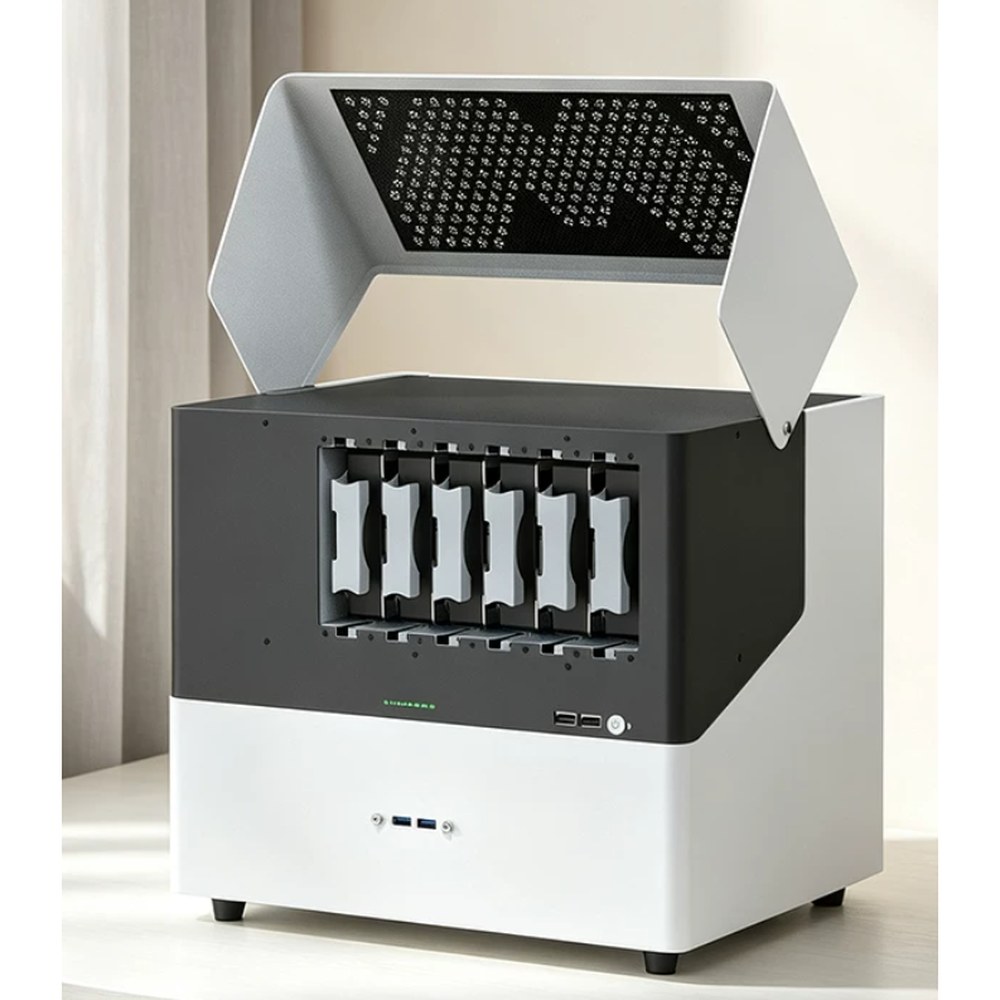
For needs such as internal file archiving, knowledge bases, development testing and edge storage in small and mid-sized companies, the METO ZNAS Six-Bay Local AI Storage Server offers a multi-bay local storage node form, serving as the hardware base for private material archiving and edge storage, with local inference capability added according to compute demand.
The value of a local AI node is keeping data control and long-term cost in your own hands, not replacing cloud compute. Which material can go to the cloud and which must stay local should be bounded by business sensitivity. In selection, first map the team's model scale, file volume and permission status, then derive bay count, compute and redundancy, which is more pragmatic than benchmarking directly against high-end models.
Comments
No comments yet. Be the first to comment.