
3D Vision Moves onto the Robot: Depth Cameras Beyond Fixed Cells
The shift in machine vision this round is not just about higher camera resolution; 3D depth perception is moving off fixed inspection stations and onto robot arms and mobile platforms. A conventional vision system sits above a production line and photographs stationary parts, but today's picking robots, collaborative arms, AGVs and humanoid platforms need to see while they move, so depth information has to travel with the motion. For solution teams, selecting a 3D camera is no longer only about image clarity, but about whether usable spatial information stays reliable under dynamic conditions.
Industrial inspection stays the base; robots add the growth curve
Mature demand for 3D vision has long centered on industry: dimensional measurement, defect inspection, bin-picking guidance and volume measurement on incoming and finished parts, where solution patterns are already well established. The newer growth in recent years comes from the robot side. A number of humanoid and mobile platforms now carry 3D cameras onto production lines and open spaces to support assembly assistance, inspection and palletizing, material handling and vending services. Industry commentary broadly expects the growth center to drift from traditional fixed stations toward commercial service, home companion and mobile-robot scenarios; once whole robots scale up, highly integrated, dependable and cost-controlled 3D vision modules are likely to become standard.
Three imaging routes, chosen by working condition, not by spec sheet
The main 3D imaging routes each have their own boundary. Stereo vision derives depth from the parallax between two cameras, capturing ambient light passively; it suits textured parts under controlled lighting and balances cost with deployment flexibility. Structured light projects a known pattern to reconstruct contour and height, delivering high close-range precision but staying sensitive to reflective, light-absorbing and dark surfaces. ToF (time-of-flight) measures the round-trip time of light directly, offering high frame rates and low texture dependence for fast motion and coarse depth, with trade-offs in long range and precision. In practice the choice is often not single-mode; multimodal combinations of 2D plus 3D, depth plus visible light let different sensors complement one another.
| Route | Principle | Better-fit conditions |
|---|---|---|
| Stereo vision | Depth from parallax, passive ambient capture | Textured, lit-controlled stations and mobile platforms; cost and flexibility balanced |
| Structured light | Projects a known pattern to solve contour and height | Close-range high-precision measurement; reflective/absorbent surfaces need early validation |
| ToF | Distance from light round-trip time | High frame rate, fast motion and coarse depth; limited long-range precision |
Mounting vision on the robot raises calibration and integration load
Fixed-station setup
- Camera position, angle and lighting stay fixed; calibration is reused over a long period
- Parts arrive stationary for capture; cycle time and field width are easy to assess up front
- System boundary is clear, with vision and motion control loosely decoupled
On-body mounting setup
- The camera moves with the arm or platform, so vibration, occlusion and view changes must be handled
- Depth data must align with chassis and arm coordinates; calibration is maintained more often
- SDK, ROS/ROS2 integration and real-time output latency matter more
Putting vision on the robot removes the overhead gantry and standalone station, but shifts the integration work onto the body. Wrist-mounted or integrated sensing lets the robot "look from where it grasps," reducing a class of calibration and occlusion issues; the trade-off is fitting camera, lens and cabling into a tight space and keeping imaging stable during motion. Whether a supplier provides usable calibration tools, coordinate-transform interfaces and algorithm examples often affects the deployment cycle more than headline resolution.
What to check during selection
Start with the target part surface: reflective metal, black light-absorbing parts, transparent or soft materials affect each route quite differently. Then verify working distance, field width and cycle time, and confirm whether the camera outputs point clouds, depth maps or structured results that can connect to the existing controller. Dynamic scenarios should be tested for stability under vibration, occlusion and lighting change, and suppliers should provide measured cases in the same condition rather than only lab demos. Interface, power, protection rating and long-term supply should also be settled early in the project.
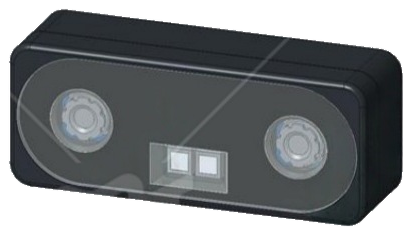
On the stereo depth side, the G62 Compact Stereo Depth Vision Solution targets close-range device localization, arm vision and depth integration in small interactive terminals; the G100+ HD Stereo Depth Vision Solution suits collaborative arm grasping, spatial perception for warehouse mobile robots and volume measurement; the Industrial and Depth Cameras cover industrial automation, machine vision, robot perception and 3D measurement, with HairayVision as a supply-side reference for stereo vision solutions.
Overall, competition in 3D vision is moving from single-camera specs toward the system coordination of perception and motion. Fixed-station metrology and inspection will persist, while depth perception on robot bodies sets new requirements for integration, disturbance resistance and development support. For procurement and solution teams, mapping out the working condition, surface material and integration interface before choosing a route or model remains safer than chasing the highest spec. This article is an industry information review and does not constitute investment advice.
Comments
No comments yet. Be the first to comment.