
Four E-Paper Technologies Meet as Low-Power Displays Expand
For many people, e-paper still means only the e-reader category, but recent technology routes show it spreading into more low-power display scenarios. Electrophoretic, electrowetting, cholesteric and total-internal-reflection routes compared on the same stage already indicate that e-paper is no longer a single solution, but a family of display paths that each trade off contrast, response speed, color capability and power consumption.
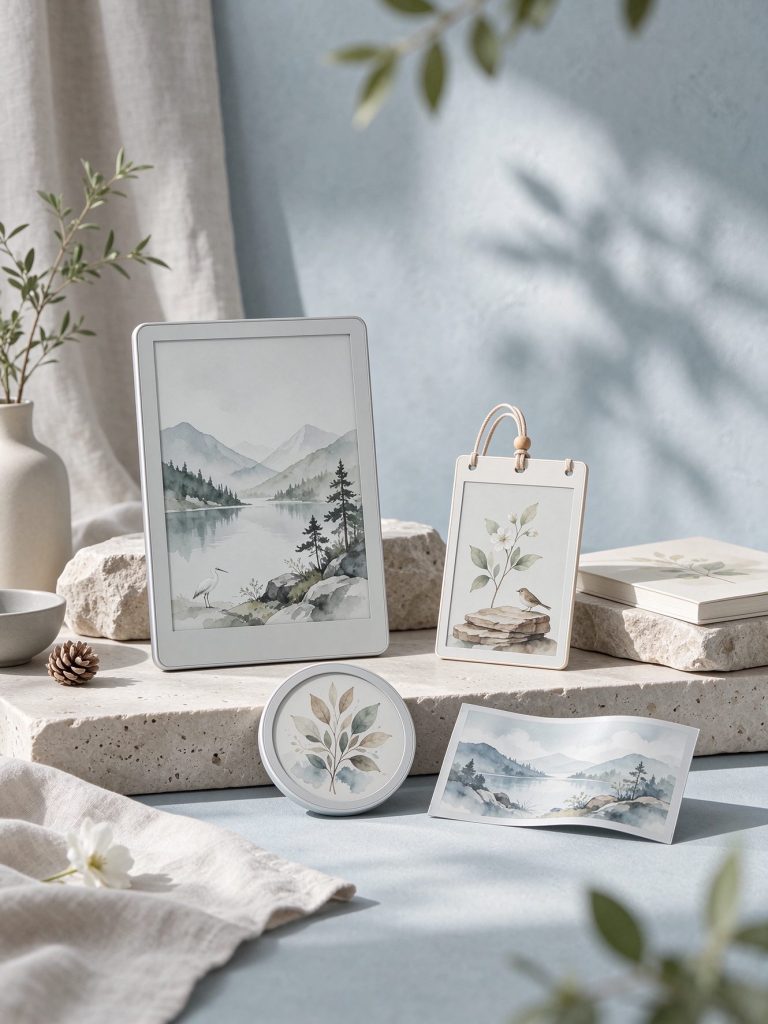
Low power is its core advantage
Compared with conventional LCDs, the core advantages of e-paper are low power, visual comfort and partial refresh: a static image draws almost no power, reflective reading stays glare-free in strong light, and it suits information that stays on screen for long periods or updates infrequently. Around these traits, applications are extending from readers into wearables, warehouse and retail e-labels, price tags, and desk or environmental signs. Each route leans differently on black-white contrast, page-turn speed, color performance and cost, so selection should return to the concrete use case rather than chasing the extreme of one metric.
What each scenario cares about
For device makers and solution teams, the value of e-paper is turning the screen into a low-power information node, not simply stacking on another display. Label scenarios value long battery life, weather resistance and batch consistency; reader scenarios care more about refresh speed, color reproduction and reading comfort; wearable and sign scenarios balance form, weight and viewing angle. Defining usage frequency, ambient light, update method and battery requirement first narrows the range of viable technology routes naturally.
| Scenario | Core needs | Main trade-offs |
|---|---|---|
| Readers | Refresh speed, color reproduction, reading comfort | Contrast, page-turn fluency and power |
| E-labels | Long battery life, weather resistance, batch consistency | Black-white contrast, standby time and batch cost |
| Wearables / signs | Form, weight, viewing angle | Bend resistance and battery life |
Each route makes its own trade-offs
A clear recent direction for e-paper is colorization and faster refresh. Color e-paper achieves imagery through color filters or color microcapsules, but usually trades off contrast, saturation and power consumption; raising page-turn speed often requires adjusting drive waveforms and dot-matrix structures, and routes differ in residual ghosting and refresh lifespan. From readers to labels, the site lists finished products such as the Reinkstone R1 reader, e-paper phone case and e-paper smart label, backed by the products and solutions of Zhilin Tech (Reinkstone). When selecting, clarifying whether the content is mainly graphics-and-text or data, and how long the update interval is, makes the trade-off between routes much clearer.
| Route | Where it leans | Main constraints |
|---|---|---|
| Electrophoretic | Comfortable reading, mature, low static power | Color and refresh speed limited |
| Electrowetting | Potential in color and response | Higher process and cost barrier |
| Cholesteric LCD | Bistable, with distinctive viewing angle and power traits | Color performance limited |
| Total internal reflection | Focuses on reflection and image structure | Narrower applicable scenarios |
It should be noted that e-paper does not win every display scenario. Cases needing high-frequency motion, high-saturation color or real-time video still suit LCD, OLED and similar solutions better; e-paper is stronger at information that is mostly static and updates occasionally. Matching the two display types by scenario is more pragmatic than forcing one screen to cover every capability.
Comments
No comments yet. Be the first to comment.