
Foldables and Wearables Push Flexible Interconnect Forward
As devices get thinner and fold more, internal interconnect is shifting from rigid-board dominance toward FPC flex boards and rigid-flex boards. These boards were once treated as little more than an internal wire, but now they take part in enclosure design and bend-life calculation. For teams building portable devices, wearables and smart hardware, flex interconnect selection and process are already tied to the overall product structure.
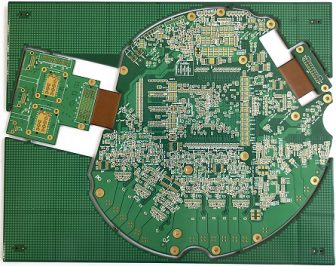
Form factor: volume and bend requirements rise together
Inside a bar-style flagship, FPC mainly links the display, battery and main board, with a relatively fixed count. A foldable connects two displays across the hinge; the hinge area bends repeatedly in a narrow space, pushing up the flex board's count, bend cycles and material toughness. A tri-fold adds another display and hinge structure, raising interconnect complexity further. Supply-chain commentary generally treats the foldable form factor as the main driver of FPC value, not just volume.
Wearables and glasses: smaller, finer, irregular shapes
Smartwatches, bands, earbuds, smart rings and AI glasses leave very little room for wiring, so the flex board must route more sensors and connections in a smaller area. That raises the bar on line width and spacing, via diameter, multilayer stacking and rigid-flex construction; outlines are often irregular, requiring 3D routing along curves and internal space. As sensor counts grow, signal quality and noise immunity have to keep pace, and batch consistency and traceability become key checks for end brands.
Process and delivery: rigid-flex merges support and routing
A rigid-flex board combines the rigid areas that need support with the flexible areas that bend on one board, cutting inter-board connectors and assembly steps, and reducing failure points from repeated connections. On delivery, bend cycles, material consistency, SMT yield and batch traceability have to be checked. Flex design usually needs early coordination with enclosure structure and stack-up; changing routing after the structure is fixed tends to constrain both space and life.
The listed RUOMEI (high-precision PCB / FPC) offers rigid-flex and FPC boards (R-FPC) and high-layer PCB / HDI boards for interconnect assessment in portable and wearable products.
Design-side considerations up front
- Plan enclosure space and bend paths at the project stage
- Route sensor traces, signal integrity and noise immunity
- Irregular 3D outline, thin profile and curve fit
Process and delivery checks
- Bend life, material toughness and batch consistency
- SMT yield, flex processing and traceability records
- Rigid-flex transition, connectors and assembly reliability
Procurement judgment: bring the board maker in on structure early
For procurement and solution teams, set out the enclosure shape, bend cycles, sensor positions and internal stack-up at the project stage, then define the flex board with the supplier rather than leaving it to the routing phase. When evaluating suppliers, look at their design track record on foldable and wearable structures, rigid-flex process and batch consistency; beyond unit price, bend reliability and delivery stability matter just as much.
Comments
No comments yet. Be the first to comment.