
Portable Power Stations: The BMS Behind Safety and Lifespan
Outdoor and portable power stations have sold quickly over the past two years, but what separates similar products is often not the rated capacity or number of outlets, but how solid the battery management is. How safely a station runs, how long its cycle life lasts, and whether it clears export certification all rest mainly on the BMS. For teams building complete devices and solution support, choosing a BMS means looking beyond the protection feature list, and matching cell series count, communications, target-market compliance and whole-device thermal design together.
The BMS is the safety center of the pack
When LFP cells are grouped, small voltage and temperature differences appear between cells. The BMS monitors each string's voltage, current and temperature in real time, cutting off or limiting current under over-voltage, under-voltage, over-current, short circuit and over-temperature. Beyond protection, it estimates state of charge (SOC) and state of health (SOH); these figures drive how users judge runtime and how the inverter and charge-discharge strategy cooperate.
Connectivity is becoming standard. Mid-to-high-end models commonly add Bluetooth, with some using RS485 or CAN, so a phone app can show cell status, charge-discharge records and alarms, and coordinate with inverters and solar controllers. At the device level, the BMS works with the power architecture, fast-charge module and thermal structure; judging whole-device reliability from BMS specs alone is not enough.
Series count and configuration map to the scenario
Different use cases call for different pack specifications. In common configurations, 4S and 8S suit RVs and small portable stations, 16S targets home backup, and 24S matches high-performance outdoor equipment and higher-power output. Series count is tied to cell capacity, inverter bus voltage, device size and cost, and more strings are not always better. Selection should start from output power, continuous runtime and expansion plans, then work back to pack spec and BMS channel count.
Compliance is unavoidable for exports. Depending on the market, portable storage must meet the relevant safety standards; common references include IEC 62619 and UL 1973. Access requirements for pack protection, labeling and testing differ by country, so certification cost and schedule should be planned into the product roadmap. Considering BMS protection thresholds, sampling accuracy and insulation coordination at the design stage is far easier than adding certification before launch.
| Link | Role | Support focus |
|---|---|---|
| Cell grouping | Provides capacity and discharge capability; consistency determines pack life | Check cell sorting, internal resistance spread and assembly process |
| BMS management | Cell monitoring, protection cutoff, SOC/SOH estimation and reporting | Verify series fit, sampling accuracy, protection strategy and comms protocol |
| Power and thermal | Charge-discharge conversion, fast-charge allocation and device thermal management | Check power margin, temperature rise control, outlets and structure fit |
| Compliance | Meets target-market safety access, lowering recall and customs risk | Confirm standards list, test schedule and documentation requirements early |
Supporting approach from solution to complete device
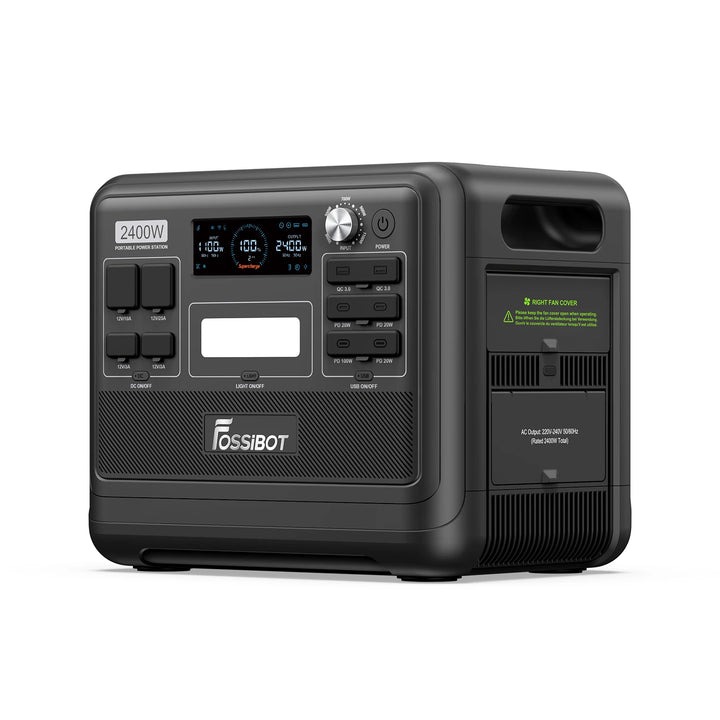
Building a device runs two closely coordinated lines: battery management and power conversion. For self-developed or joint projects, the cell series count and BMS scheme are fixed first, then charge-discharge circuits, structural cooling and host interaction are designed around it. For integrators, support is layered into management modules, power modules and complete-device schemes. A Battery Charge-discharge Management (BMS) Solution covers cell monitoring, protection and communications; a PD Fast Charging and High-power Power Solution handles charge-discharge conversion and power allocation. On the finished-device side, the F2400 Outdoor Power Station and F3600 Pro Expandable Power Station cover outdoor scenarios at different power levels and expansion needs.
Judgments for procurement and solution teams
First set the pack spec by target scenario: short emergency use, outdoor work, or long home backup—power and runtime decide series count and capacity. Then check how the BMS matches the device: sampling channels, protection thresholds, comms protocol and thermal margin, rather than comparing only the number of protection features. For export products, put the certification list ahead of selection, avoiding a finished prototype that fails a required standard. Finally look at supplier experience: production records from similar stations, cell consistency control and after-sales data reflect long-term reliability better than paper specs. Competition in portable storage will shift from capacity race to safety, lifespan and compliance, and the BMS is the most tangible part of that dividing line.
Comments
No comments yet. Be the first to comment.