
Robot Ramp-up Puts Parts Inspection and Reliability Testing Up Front
In the first year humanoid and service robots move from prototype to production, the center of competition is shifting from single-point specifications to batch consistency. A single robot carries a large number of joints, actuators, sensors and structural parts; prototypes can be tuned by hand, but during volume ramp what separates suppliers is whether parts can be made fast and accurate over the long run, with consistent batches. That puts inspection, metrology and reliability validation on center stage: whether a component passes is no longer judged by sample feel alone, but by measurement equipment, test data and long-term running records.
Why production puts inspection first
By an industry example, one humanoid robot carries about 60 linear actuators plus a comparable number of rotary actuators, up to roughly 120 drive devices in total; the transmission parts include sun gears, planet gears, shafts, internal gear rings and planet carriers. At a million-unit annual run, drive devices alone would be on the order of hundreds of millions of sets, with an even larger volume of precision parts. The requirement for these parts is not just that they can be made, but that under high-speed repeated motion their precision, surface quality and assembly consistency hold—factors that directly affect running noise, wear rate and machine life.
On the sensor side, capacity is also expanding. Companies making six-axis force sensors for humanoid robots and high-end manufacturing are planning automated lines on the hundred-thousand-unit scale; joint modules are being packaged toward lighter weight and higher torque, with public examples showing integrated joints at a peak torque of 35 N·m and about 450 grams. As part density and precision requirements rise, spot checks and hands-on judgment are no longer enough; the production system must turn dimensional, mechanical and environmental validation into regular procedures.
How the validation chain runs in layers
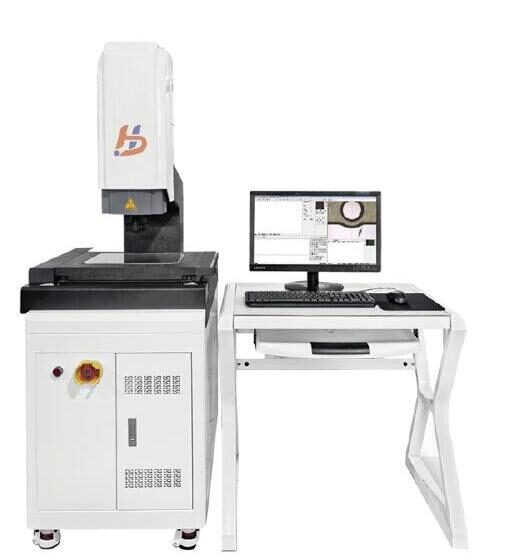
From parts to machine, validation runs along several lines. First comes dimensional and geometric inspection: vision measuring machines, CMMs, projectors and microscopes compare profile, dimensions and tolerances against drawings. Next is mechanical and material performance: tension, compression, key-life, vibration and abrasion tests verify how materials and structures hold up under force. Then environmental reliability: chambers for temperature-humidity, thermal shock, salt spray and aging simulate sudden environmental changes, corrosion and long-term aging. After equipment goes online, vibration, temperature and other channels keep acquiring data to record running state and feed a feedback loop.
What it means for integrators and buyers
When selecting component suppliers, beyond parameters and samples, look for a systematic inspection capability and reliability-data support: how batch consistency is controlled, how key dimensions are spot-checked, and to what depth environmental validation is done. During solution evaluation, machine makers should bring inspection reports, test records and long-term running data into comparison and selection. On the equipment side, optical vision measurement equipment covers video machines, CMMs, projectors and microscopes for part dimension, profile and tolerance inspection; mechanical and material testers cover tension, compression, bending, peeling and fatigue testing; environmental reliability chambers cover temperature-humidity, thermal shock, salt spray and aging weathering tests; IEPE vibration acquisition instrument and rail-mounted analyzer collect vibration signals after deployment for on-site analysis and condition-monitoring integration.
Overall, the robot track is moving from "can the prototype be built" to "can batches be produced steadily." Inspection and reliability validation used to be a supporting step before production, but have now become an indispensable link in the supply-chain division of labor. Those who solidify part consistency and validation data are better positioned to cross the gap from prototype to volume.
Comments
No comments yet. Be the first to comment.