
Domestic CPU Servers and Security Platforms in Industry Procurement
Since October, domestic server procurement in government, finance and civil aviation has landed in a cluster, with Kunpeng, Hygon, Phytium, Loongson/Zhaoxin and ARM routes appearing in the same tenders. This ramp-up is not simply swapping an imported platform for a domestic one; on the OEM side, mainboard form factor, memory mounting, expansion cards and platform adaptation all need to be re-checked as one set. For solution and procurement teams, separating route and scenario before comparing specs matters more than a direct spec sheet comparison.
Tenders land: customers procure by route in separate lots
According to public tender and award records, in late October China TravelSky's 2026 hardware and software procurement split its domestic Hygon CPU servers into standard compute and standard storage lots, awarded to ZTE and New H3C respectively; in early November the People's Bank of China server procurement package two listed 273 domestic ARM-chip servers with seven-year maintenance; in mid-November the two Kunpeng-route lots of the 2026 CAE simulation toolmaker Xinchuang server project were awarded to China Great Wall. Taken together, customers are not betting on a single architecture; they tender compute, storage, edge access and security platforms separately by workload.
Multiple CPU routes run in parallel; no one scheme covers all
Domestic CPUs differ in instruction set, power, mainboard form factor and ecosystem maturity. The Kunpeng route leans toward high-performance dual/single-socket server mainboards and full systems; Hygon, Phytium, Loongson and Zhaoxin appear more often in network security and industry-specific platforms; Atom/ARM architectures carry edge gateways and access-side devices. Selection should first fix whether the workload is centralized compute, storage forwarding or edge access, and then derive mainboard size, memory channels, expansion slots and cooling; security platforms integrate processor, ports and acceleration slots into one rack chassis.
System support: mainboard, memory, cards and adaptation checked together
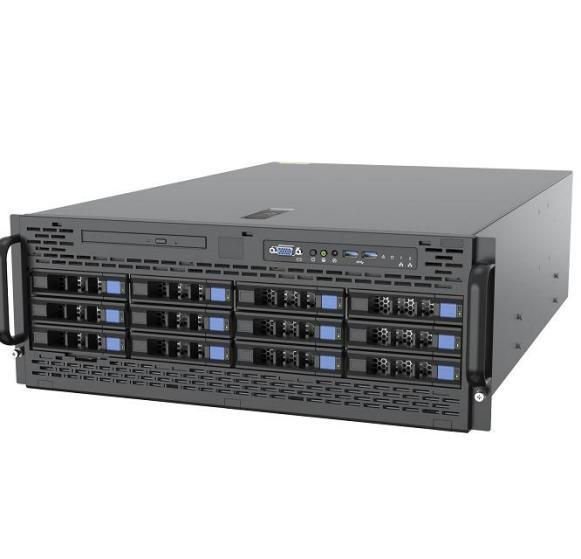
For hardware support, a Xinchuang platform should be assessed as a set: mainboard specs, memory mounting, network expansion and acceleration cards, plus structural cooling. Server mainboards are checked for socket count, memory slots and onboard-memory schemes; security platforms reserve slots for NICs, DPU acceleration modules and QAT; edge gateways focus on rack, desktop and DIN-rail form factors and wide-temperature power. In this platform support space, XINGHAN covers multi-architecture security hosts and edge systems across X86/ARM, Phytium, Hygon, Zhaoxin and Loongson; on the finished-goods side, the NSR7936 Kunpeng Dual AI Server suits centralized compute loads, the Hygon Network Security Platform and Phytium Domestic Security Platform serve dedicated security scenarios, and the Network Expansion Modules & Accelerator Cards complete NIC and acceleration expansion.
| Scenario | Common platform form | Support checks |
|---|---|---|
| Centralized compute / pool | Dual-socket server, large memory, many bays | Socket count, memory channels, chassis cooling and power |
| Storage and forwarding | Storage server or security platform | Bay count, port density and expansion slots |
| Edge access | ARM / Atom gateway system | Mounting form, wide-temp power, field cabling |
| Dedicated security | Domestic-CPU security system | Ecosystem adaptation, acceleration expansion, institutional certification |
What this means for procurement and solution teams
The Xinchuang ramp-up is structural; routes will not substitute for one another in the near term. Procurement should split platform demand by scenario, evaluating centralized compute, storage, edge access and dedicated security separately rather than covering all loads with one general-purpose server. Solution teams should lock expansion slots, headroom for memory growth and an alternative architecture early; changing platform routes after the prototype stage often pulls in mainboard, structure and software changes.
Comments
No comments yet. Be the first to comment.