
Two Routes for AI Glasses: Audio Shades Land First, Displays Wait on Cost and Battery
AI glasses look like one category, but have already split into two routes. One is the screenless audio glasses, using directional speakers, a mic array and a voice assistant for calls, listening and translation; the other is near-eye-display AR glasses that project imagery in front of the wearer. The two differ sharply in maturity, cost structure and wear constraints, and should not be evaluated as a single product type.
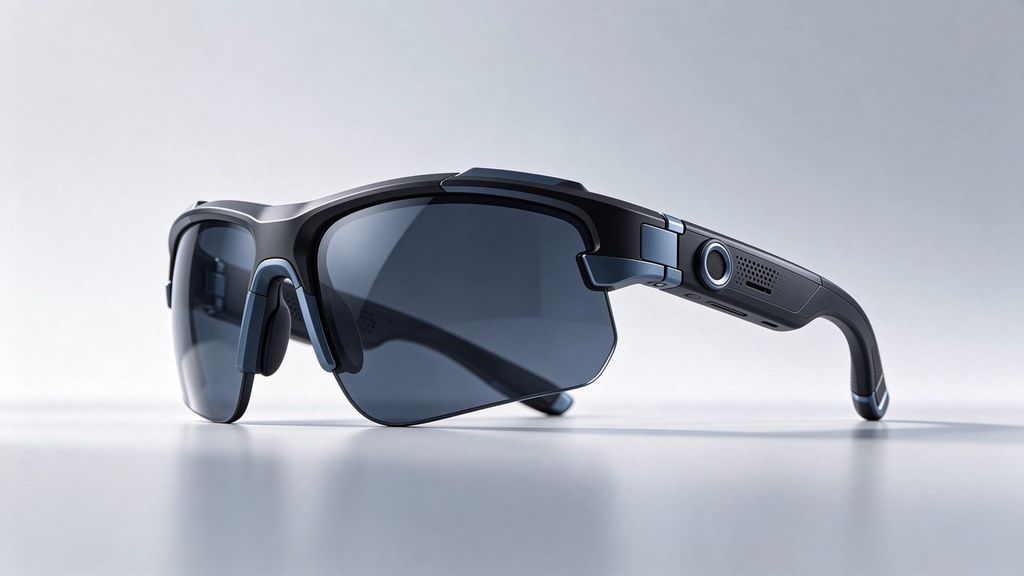
Audio glasses first make all-day wear work
The CAICT report on AI glasses classifies AI audio glasses as an auditory-enhancement, hands-free interaction category: the form stays closest to conventional eyewear, centered on voice assistant, call noise reduction and music playback, with screenless interaction in commuting, translation and sports-leisure scenes. This route needs no display module in the temple, so weight, battery life and appearance are easier to balance, and it is the steadier segment in consumer shipments today. Some new products even drop the camera to become lighter and longer-lasting, positioned as a daily-wear audio entry point.
Near-eye display is held back by cost, weight and battery
The display route must solve a full stack: waveguide or Micro LED display, optical engine and thermal management. CINNO Research notes that full-color Micro LED waveguide is becoming the main technical line for next-generation display AR, but most mainstream products today still use single-color green display, and moving to full color needs supply-chain cost cuts and lightweighting. Display occupies limited temple space, so battery capacity, body weight and sound leakage constrain one another; this is why display models carry higher prices and iterate more cautiously.
| Dimension | Audio glasses | Near-eye-display AR |
|---|---|---|
| Core function | Calls, listening, voice interaction | Image projection and information overlay |
| Key components | Directional speaker, mic array, Bluetooth main chip | Waveguide or Micro LED, optical engine, display driver |
| Current constraint | Open-sound leakage and audio balance | Cost, weight, battery life and cooling |
| Mature scenes | Commuting, sports, calls, translation | Navigation prompts, info overlay, specific AR apps |
Each route maps to different supply capabilities
By product form, the audio-side products sit closer to daily wear. In the INNOECO range, the Sports Cycling Audio Shades Series targets outdoor cycling and running with a lightweight frame and open audio; the Retro Polarized Smart Sunglasses covers street style, driving and commuting, with some models supporting real-time translation, meeting notes and voice memos; the Optical Business Smart Glasses target office meetings and business commuting, with dual-mic noise reduction, voice-to-text and a voice assistant. These all follow the screenless audio route, putting weight and battery life first.
Audio route watch points
- Open-sound leakage control and mic noise reduction
- Temple battery life and overall wearing weight
- Stability of assistant and translation software
Display route watch points
- Optical engine and waveguide supply, display cost
- Thermal, battery and lightweighting balance
- Display content ecosystem and usable scenarios
Overall, audio glasses first make daily calls, listening and voice interaction work, while near-eye display still waits on display component cost, weight and battery to improve together. The two routes will run in parallel for now: audio models carry mass daily wear, and display models start with navigation and information overlay. When assessing the supply chain, deciding which route a product takes first, then matching components and process requirements, is clearer than comparing everything under one “AI glasses” label.
Comments
No comments yet. Be the first to comment.