
CCL Materials Tighten: AI Glass Cloth and Copper Foil Prices Rise
Upstream of copper-clad laminate (CCL) and PCBs is going through a structural squeeze: AI server and high-speed communications demand have pushed premium glass fabric, high-end copper foil and resin into tight balance, with prices rising step by step along the material chain. Standard thick cloth and generic laminate show clearly smaller gains, splitting the market between thin and thick grades and between premium and commodity products. Industry bodies and analysts broadly agree the tightness will last at least through the first half of 2027, with balance only likely to return around 2028 once new capacity comes online.
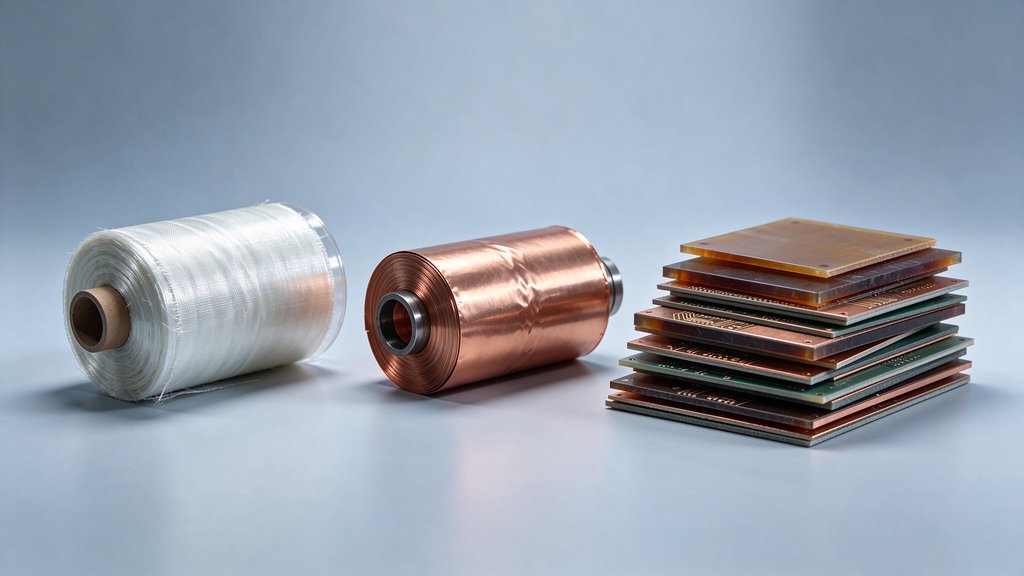
The bottleneck sits upstream, not in finished boards
A warning report issued on November 20 by the Global Electronics Association points to demand outstripping supply across the whole PCB chain, from fiberglass fabric and resin to finished circuit boards. The real constraint is not back-end capacity such as lamination and drilling, but upstream fiberglass, resin, copper foil and production equipment. The group expects the bottleneck to persist at least through the first half of 2027, with no meaningful relief before mid-2028. In other words, even as manufacturing capacity keeps expanding in Asia, material-side queuing and allocation will still limit finished-board delivery.
| Fabric grade | Dec 2025 | Nov 2026 | Gain and usage profile |
|---|---|---|---|
| 1080 thin cloth | RMB 5.0/m | RMB 20.8/m | Largest gain; used in high-layer-count, high-speed and AI boards where demand concentrates |
| 2116 thin cloth | RMB 4.9/m | RMB 20.2/m | A premium thin grade alongside 1080, lifted by AI board demand |
| 7628 thick cloth | RMB 4.6/m | RMB 14.6/m | Smaller gain; domestic looms mainly produce thick cloth, supply relatively looser |
Price hikes transmit yarn to fabric to laminate
According to SMM (Zhuochuang) data, mainstream electronic yarn G75 quotes rose by RMB 3,000 per ton in October to a range of RMB 25,800–26,000 per ton; 7628 electronic fabric rose by RMB 1.5 per meter to RMB 13.0–13.3 per meter. Tight materials quickly showed up in CCL makers' price letters: from late August, Kingboard Laminates raised all products by 10%–20%; from September, Panasonic applied revised pricing to new orders, with some premium products up to 30% higher; Nan Ya Plastics lifted CCL prices by 20%–25%; some smaller makers raised laminate 10% and prepreg 15%. In fiberglass, China Jushi raised thick cloth by 15% and thin cloth by 20% in September, widening the premium on thin grades.
Profit concentrates in premium grades; commodity grades still tied to end demand
The same split shows up in maker earnings. Public financials show some leading CCL producers lifting gross margin from about 11.8% in FY2025 to about 27.6% in the first three quarters of 2026, with a single-quarter gross margin near 38%; the AI laminate revenue share rose from single digits to close to 30%, and capacity utilization reached full output, compared with only 60%–70% in 2023–2024. The growth comes mainly from a premium-mix upgrade rather than a broad across-the-board rise. Conventional laminate for ordinary consumer electronics still has its demand and price elasticity constrained by end-market conditions.
Laminate and design side
- For high-speed, high-layer-count programs, lock substrate grades and supplier quota early; keep downgrade alternatives in the design so premium-material queues do not delay prototyping
- Account for thin-cloth and high-end foil share in design; evaluate thick-cloth and standard substrate options for cost-sensitive boards
Procurement and supply side
- Track quoting cycles for electronic yarn, fabric and copper foil on long-cycle orders; lock prices or secure framework supply terms in advance
- Follow loom and copper-foil capacity additions; distinguish tightness between premium and commodity grades instead of stocking at the same pace
Overall, this PCB upstream squeeze is a structural shortage of premium materials driven by AI compute demand, not a uniform rise across the whole chain. Citi's November 23 China industry survey locates the bottleneck in AI-grade glass fabric and premium copper foil: supply stays tight and prices rise through 2027, with balance returning only after new capacity releases in 2028, broadly in line with the industry association's relief timeline. For sourcing and engineering teams, the key is to bring premium-material lead times and price flexibility into project scheduling, and to watch how quickly thin-cloth looms, high-end copper foil and resin capacity actually come online. This article is an industry information review and does not constitute investment advice.
Comments
No comments yet. Be the first to comment.