
Industrial Labeling Split: Tube Markers, Handheld and Color Print-Cut
Labeling looks like a last-mile purchasing detail, but once wire harnesses, cabinets and equipment nameplates carry inconsistent numbers, later maintenance, asset inventory and fault location all cost extra effort. Industrial labelers do not cover every media on one machine: sleeves and heat-shrink tubing call for tube markers, field cabling needs a portable handheld unit, and short-run custom-shaped labels require color printing paired with contour cutting. Selection should start with the media to be printed and the workstation in use, then check width range, cutting, editing method, and how well consumables and software fit together.
Sort media first, then the workstation
Common industrial identification media fall into a few groups. Wire sleeves and heat-shrink tubing sit over harnesses, so characters must adapt to the tube diameter; flat labels stick to cabinets, enclosures and asset surfaces; contour-cut labels are mainly used for brand stickers and sample packaging. The paper path, print head and cutting structure for these media are not interchangeable. The workstations differ as well: a bench allows batch preparation with PC layout, while patrol or cabling work needs a carry-on device that inputs and prints on the spot; novelty or packaging prototyping asks for color printing and contour cutting in the same step.
Where each device type fits
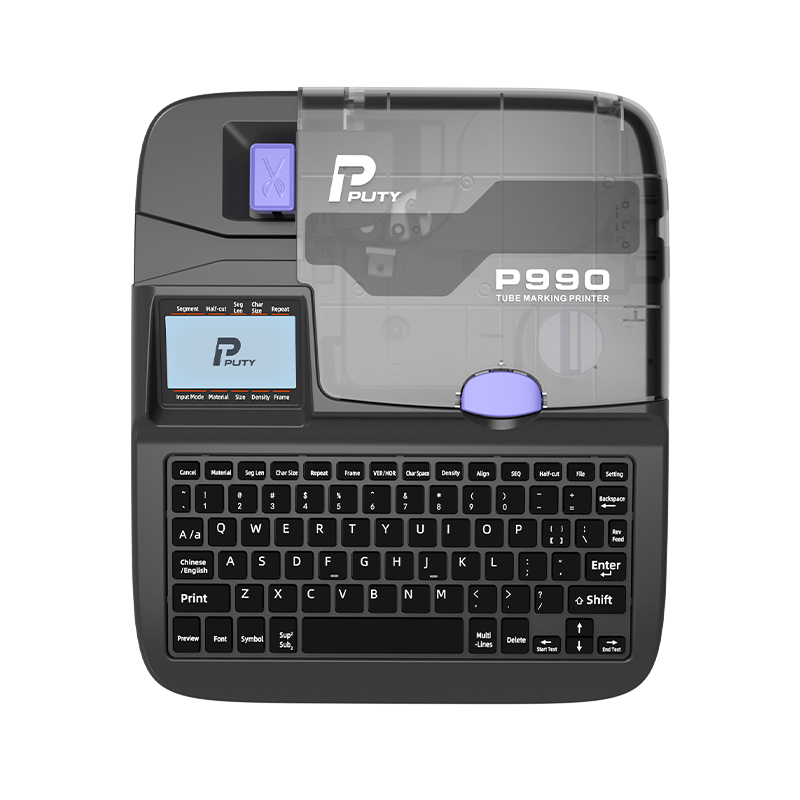
A desktop tube marker handles batch preparation at the bench, printing sleeves, heat-shrink tubing and label tape by number in one pass. A handheld unit packs keyboard, display and print mechanism into a portable body, so cabling or patrol staff can produce labels at the job point. A color print-and-cut machine targets short-run, multi-style brand labels, combining full-color printing and contour cutting in one desktop device. The three serve different stations and often work together on the same project rather than replacing one another.
| Form | Typical station | Media and capability notes |
|---|---|---|
| Desktop tube marker | Bench batch preparation | Sleeves, heat-shrink, label tape and marking strips; keyboard or PC editing |
| Handheld labeler | Field cabling, patrol, asset inventory | Flat labels and narrow ribbon; on-device input, batch jobs can be sent over Wi-Fi |
| Color print-and-cut | Short-run brand labels, packaging prototypes | Full-color printing plus contour cutting; film and paper media supported |
What to check one by one
Match the width range first: sleeves depend on the heat-shrink diameter range, while label tape depends on common width steps. The cutting method affects how easily labels can be threaded and applied later. The editing method decides whether numbers can be changed directly on the device or must be laid out on a PC and sent down. Consumables and software should be confirmed together: whether ribbons, sleeves and label stock form one consistent system, and which languages and operating systems the desktop tool or mobile app supports. Field-oriented units also need a closer look at carrying method, battery life and body protection.
Supply-side reference
On the industrial identification side, PUTY develops and manufactures labeling equipment in Pingshan, Shenzhen, covering tube markers, handheld labelers, wide-format devices and consumables. The P990 Thermal Transfer Tube Marking Printer targets control panels, industrial automation equipment and harness identification, printing numbers onto sleeves, heat-shrink tubing, label tape and marking strips with keyboard and PC editing. The TF980S Handheld Thermal Transfer Label Printer suits network cabling, electrical equipment, asset inventory and on-site labeling, with an on-device physical keyboard and Wi-Fi batch job transfer. The PU112B Color Print-and-Cut Label Printer serves novelty stickers, sample labels and short-run packaging prototypes, combining full-color printing and contour cutting in one desktop machine.
The value of labeling equipment lies less in print speed than in keeping numbering consistent over the long term, so that finding a wire or a cabinet later does not mean re-tracing everything. It helps to list the media, common widths and workstations first, then decide whether bench batch preparation leads with handheld units filling in, or a separate color prototyping step is needed. Consumables, editing software and connectivity should be checked during sample trials, so the device does not arrive only to find the media or format does not match.
Comments
No comments yet. Be the first to comment.