
Predictive Maintenance Goes Online: Vibration Sensing at the Edge
Plant equipment health management is moving away from periodic walk-around measurements toward continuous monitoring installed once and left running. In the past, wiring cost and data volume kept many pumps, fans, compressors and conveyor drives on inspection rounds and reactive repair; now wireless vibration nodes plus on-device local analysis have lowered the barrier to online monitoring. What matters in deployment is not how many sensors are used, but which assets deserve permanent nodes, where the data is first processed, and how an anomaly reaches a maintenance action.
From inspection rounds to continuous online monitoring
Traditional vibration management relies on portable meters collecting data along routes, after which engineers review waveforms and spectra off-line. This is reliable, but gaps between rounds can let early faults develop unseen, and consistency depends heavily on inspector experience and scheduling. As online monitoring spreads beyond critical machines, a new set of questions follows: wired or wireless networking, long-term power, data upload cadence, alarm rules and trend analysis. Retrofits in older plants are especially constrained: adding wired nodes often means shutting down equipment to run cables, so quick-install wireless schemes are more acceptable for secondary assets.
Edge devices judge first; only metrics and alarms go up
More monitoring now pushes processing close to the machine. Nodes extract signals, compute features and detect anomalies locally, then upload key metrics, condition classes or alarms instead of streaming every raw waveform. This cuts bandwidth and power, lets battery-powered wireless nodes run for years, and shortens the alarm chain without waiting for a cloud response.
On the diagnostic side, classic signal processing and AI models are combining. Machine learning pulls out bearing faults, rotor imbalance, loose mechanical parts and gear damage from historical data, then judges trends against maintenance records and operating conditions. AI has not replaced classical vibration analysis: model accuracy depends on fault sample quality, generalization across operating conditions and whether conclusions can be explained. Mature practice keeps conventional algorithms as the base and uses AI for assisted recognition, rather than handing every judgment to a model.
Selection starts with asset grade and connection conditions
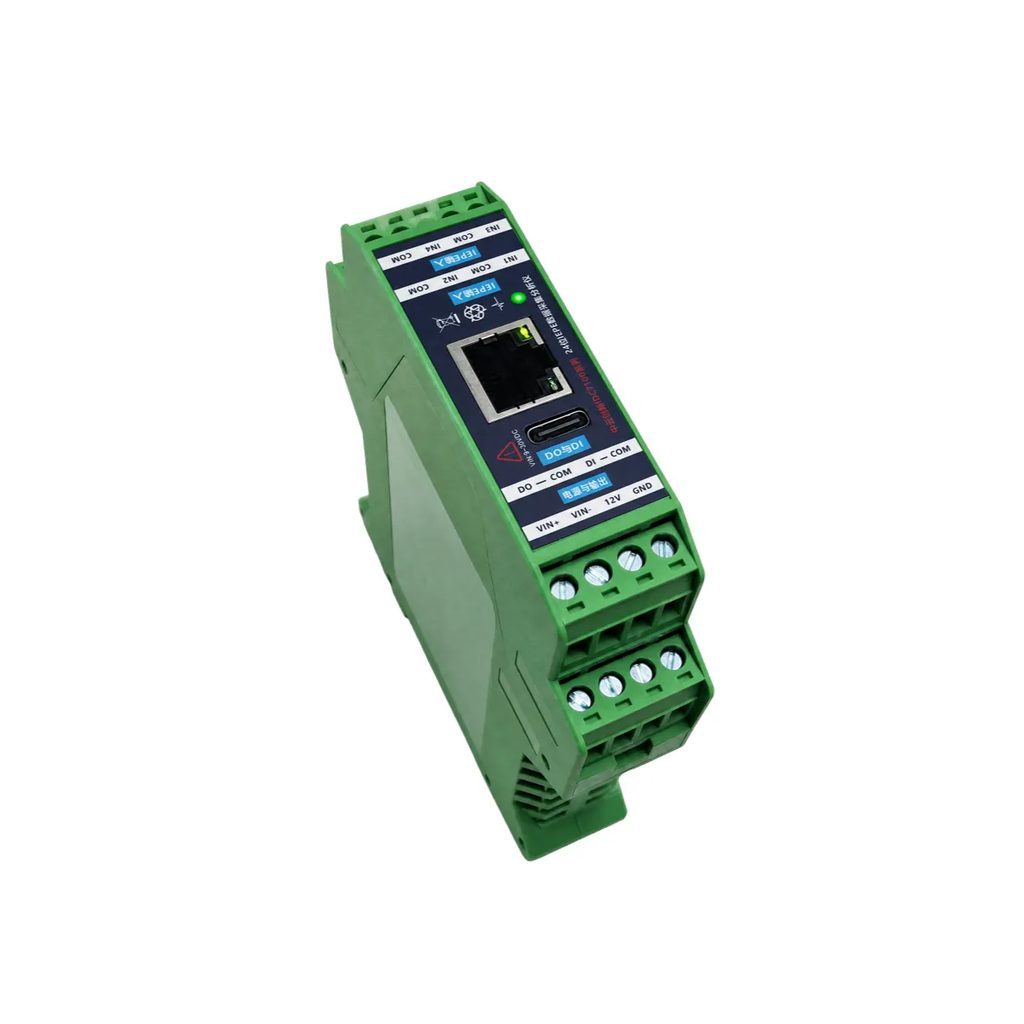
Hardware sits in three layers. The bottom layer is the sensing node, turning vibration and temperature into electrical signals; the middle is the acquisition and analysis unit, gathering channels, running local compute and communicating upstream; the top is the platform and recorder, holding long-term trends, reports and multi-asset comparison. Solution providers often bundle sensing, acquisition and communications to shorten development and validation. A Vibration Sensing and Wireless Data Acquisition Condition Monitoring Solution covers the full chain from measurement point to wireless upload; an IEPE Vibration Acquisition Instrument and Rail-mounted Analyzer suits fixed multi-channel acquisition and on-site analysis; a Multi-channel Paperless Recorder and Wireless Environment Data Logger records temperature and operating signals alongside vibration for cross-checking.
| Method | Best fit | Selection and deployment focus |
|---|---|---|
| Walk-around inspection | Lower-criticality assets with limited failure consequences and tight budgets | Relies on experience, data is discontinuous; useful as a complement |
| Permanent online nodes | Critical machines and assets at high risk of recurrent faults | Confirm wired/wireless networking, battery life, alarm rules and spares support |
| Retrofit wireless nodes | Older plants and secondary assets where shutdown cabling is impractical | Check mounting consistency, ingress protection, mesh link stability and battery replacement |
Judgments for procurement and solution teams
First map assets: which carry high downtime cost and show early warning signs, and which are cheap to repair and suited to inspection rounds. Put continuous-monitoring budget on the former. Then check connection conditions: cabling feasibility, power supply, electromagnetic and protection environment on site—these decide between wired acquisition and wireless nodes. When evaluating suppliers, look beyond sensor range and channel count at analysis capability, operating records from similar equipment, and whether alarms connect to the existing maintenance flow. Condition monitoring does not end once sensors are bought; its real value builds as long-term data feeds back, sharpening fault judgment and moving repair earlier. A pragmatic path pilots one production line or one critical asset class, gets acquisition, alarm and repair closed-loop working, then decides on wider rollout.
Comments
No comments yet. Be the first to comment.