
Racks Get Hotter: Cooling and Power Planned Together at Rack Level
Once AI compute concentrates in racks, the tightest constraint is often not single-chip performance but how power is delivered and heat removed. As per-rack power climbs, air cooling and distributed power are reaching their limits, so cooling and power are designed together at rack level. For server, mainboard and power-board teams, checking accelerator count alone is no longer enough; current capacity, cooling interfaces and redundant supply must be planned up front.
As density rises, air cooling hits its boundary first
General-purpose racks once ran modest power, carried by chassis fans and room air conditioning. AI training and dense inference pack multiple accelerators into one chassis, raising heat density, and air cooling strains on airflow, noise and exchange efficiency. Industry observations note dense AI racks draw several times the power of conventional air-cooled racks; once air cannot remove the heat effectively, liquid carries it away near the chips, then rejects it outside via a CDU, rear-door exchanger or liquid-to-air sidecar.
| Dimension | Air cooling | Liquid cooling |
|---|---|---|
| Typical use | General compute, edge nodes and standard servers | Dense AI training and inference racks |
| Cooling method | Chassis fans exchanging heat with room air | Cold plates, CDU and rear-door exchangers draw heat nearby |
| Support needs | Airflow path and dust maintenance are simple | Lines, coolant and a maintenance system must be matched |
Power delivery: from rack supplies to board-level current paths
Power density pressures the supply chain too. Dense racks move to modular power shelves and higher-voltage DC, with hot-swappable redundant modules for maintenance and expansion without downtime. At board level, the power board and loop carry larger currents, so thick copper, embedded copper blocks and busbar connections are common. Thermal paths, trace width and cooling pads must be designed with current capacity, not added after routing.
To consider up front in design
- Estimate power and cooling headroom from accelerator power limits
- Layout board current paths, thermal routes and interfaces together
- Leave room for later liquid-cooling and high-density power upgrades
To check in selection
- Server power redundancy, cooling scheme and expansion bays
- Power boards judged on copper thickness, current carry and thermal structure
- Assess how much headroom remains for future expansion
Judgment for procurement and solution teams
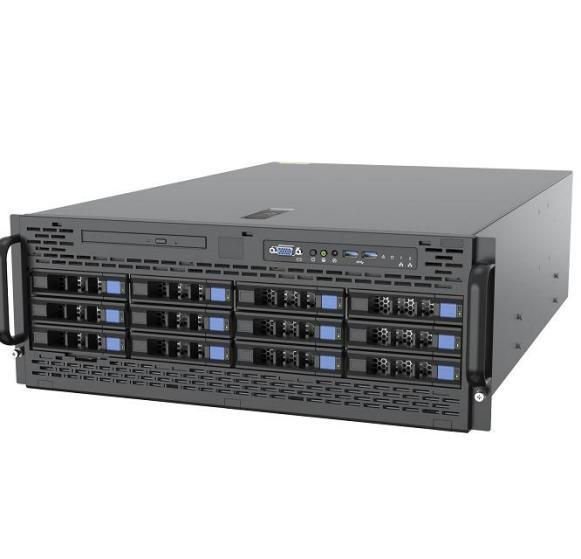
Whether an AI setup runs steadily depends on matching power and cooling as a rack-level system, not only on compute specs. On the board side, the compute power board / thick-copper board (power module, power board) targets high-current loops with thick copper and embedded blocks. On the server side, the NSR7936 Kunpeng dual-socket AI server reserves dual-wide full-size GPU slots; check GPU count and power ceiling, PCIe expansion and power redundancy.
In the near term, cooling and power matching on dense racks may become a delivery bottleneck sooner than accelerator iteration. Write down target power, cooling method and power architecture at definition, then work back to mainboard, power board and server config. Compute holds up only once cooling and power keep pace.
Comments
No comments yet. Be the first to comment.