
UHF RFID Enters Warehouses: Bulk Read and Terminal Selection
Warehouse inventory has long been labor-intensive: staff push carts and scan items one by one, and a large-warehouse count can stop operations and pull in the whole team for days. UHF RFID shifts identification from "aim and scan" to "bulk read at range," so pallets, totes and full racks can be read as they pass a portal. RFID does not make barcode terminals obsolete; the two technologies hold different positions in different workflow steps, and terminal selection should follow read range, environment and system integration rather than simply asking whether it is RF identification.
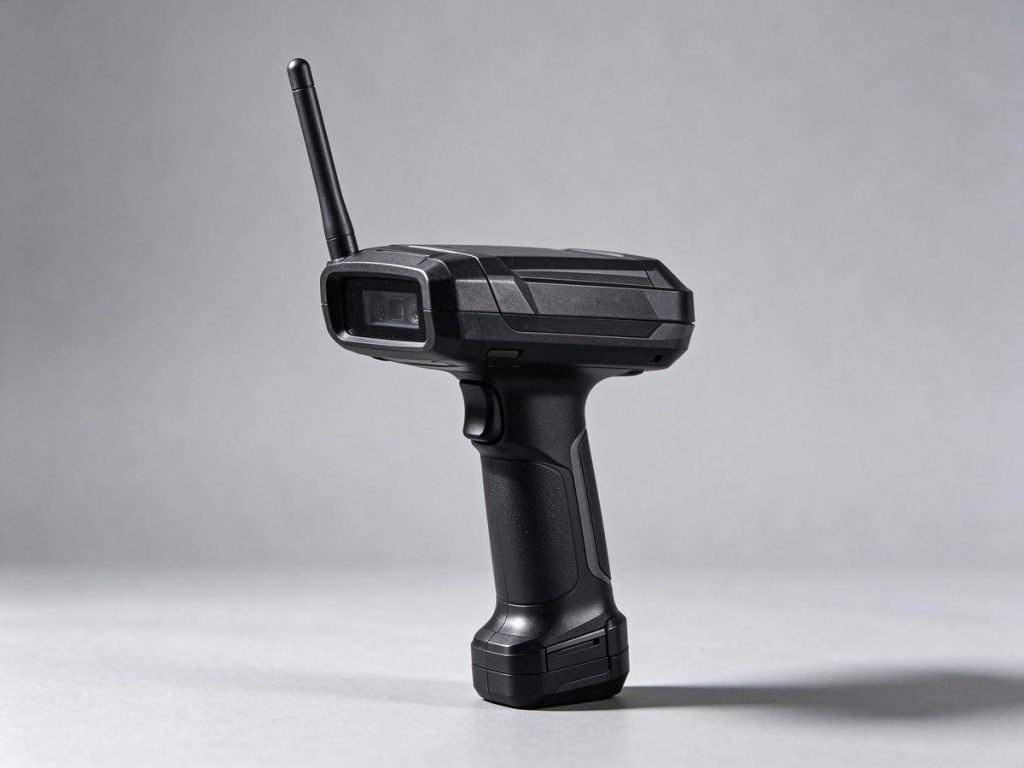
Barcode and RFID solve different workflow problems
One- and two-dimensional codes need line-of-sight alignment and are read one item at a time, at low cost and with straightforward recognition, which suits item verification, outbound check and low-price small parts. UHF RFID needs no optical line of sight and can read multiple tags within meters, with the advantage in batch counting, tote tracking and asset management. Real warehouses usually run a mixed setup: portals register inbound and outbound goods without manual steps, handheld devices do picking, verification and exception handling, and barcode PDAs remain for loose items and document scanning.
| Form | Read method | Better-fit step |
|---|---|---|
| Barcode PDA | Aim and scan 1D/2D codes one by one; low cost, quick to learn | Item verification, outbound check, loose small parts and document entry |
| UHF handheld gun / tablet | Handheld RF bulk read; can locate bin positions and verify item by item | Cycle counting, picking, exception review and mobile patrol |
| Fixed portal / channel antenna | Automatically batch-reads goods passing the channel, no manual item-by-item operation | Inbound/outbound registration, pallet turnover and full-rack pass-through |
Terminal selection must land on the field environment
Choose the RFID terminal by work form. Mobile counting and picking rely mainly on handheld devices: UHF/RFID Handheld Terminals and Guns pair RF reading with operation, while positions that run a WMS app on a tablet and need RF expansion can use a Rugged Industrial Tablets and UHF Readers combination; barcode-heavy, item-scanning workflows remain better served by a Barcode PDA and Industrial Scanner. At device level, check Android version and Wi-Fi, protection rating, battery life, antenna gain and read range, and integration with the existing WMS, ERP or asset system.
Metal and liquid are the main range reducers
Real RFID read range is not the ideal value on a spec sheet. Metal shelving reflects RF, while liquids and moisture-absorbent packaging absorb the signal, and tag position and orientation on different materials produce noticeably different read results. Before deployment, run a small pilot with real goods to confirm tag placement, antenna direction and reader power. In high-metal, high-liquid locations, tag type or near-field antennas often need adjustment rather than simply chasing the longest possible read range.
Implementation judgments
When RFID enters a warehouse, starting with high-value, high-turnover or traceability-critical categories shows return more easily than rolling it out across the whole site at once. When evaluating a project, count tag cost, labeling labor, antenna and terminal investment, and system modification together rather than comparing reader unit price alone. Barcode and RF will coexist for a long time: hand bulk-read steps to RFID and keep barcode terminals for item verification. Configuring devices by workflow step is the steadier way to land.
Tags themselves deserve as much attention as the readers. Adhesive performance on corrugated fiber, plastic totes, metal cases and liquid containers differs widely, and tag orientation toward the antenna changes read reliability, so a tag type that works well on cardboard may underperform on metal. During a pilot, track not only read rate but also failed reads by container type and position, and use that list to choose tag form factors and labeling rules before scale-up. On the system side, RFID data only pays off when it reconciles cleanly with existing WMS stock records; duplicate reads, unrecognized tags and unmatched inbound documents need a defined exception workflow, or the new terminals will simply push data-quality problems onto the back office.
Comments
No comments yet. Be the first to comment.