
Video Security Shifts to AI Analytics: Intent Ahead of Readiness
The latest upgrade wave in video security is no longer mainly about swapping in higher-pixel cameras, but about turning footage into analyzable, linkable data. In recent projects, algorithms such as person/vehicle recognition, perimeter intrusion, loitering detection and people counting come up repeatedly, yet between "willing to invest in AI" and "able to run it reliably in production," there remain deployment maturity, false-alarm control and responsibility boundaries. A North American and European industry survey lays out this gap between intent and readiness fairly clearly.
Investment priority has moved from hardware to analytics
IQSIGHT, formerly Bosch Video Systems, released its 2027 Video Security Outlook, surveying 240 security leaders, systems integrators and engineering specifiers across North America and Europe, with the fieldwork completed in August 2026. The results show 68% rank AI and analytics among their top three investment priorities for the next 12 months, well ahead of camera hardware upgrades at 40%; 65% of integrators say AI is the topic customers raise most, and 62% expect advanced AI and video analytics to have the greatest industry impact over the next three years. On market size, MarketsandMarkets estimates the video-as-a-sensor market at about USD 79.66 billion in 2026, reaching about USD 135.75 billion in 2032, a CAGR of about 9.3%, supported by edge computing, multi-sensor imaging and platform-based analytics.
Intent leads, but deployment readiness lags
Strong investment intent has not translated into equally mature deployment. In the same survey, only 8% feel ready to deploy AI capabilities, and just 7% report wide deployment today; 45% say limited existing AI capability is holding back their current programs. Barriers concentrate on performance: 44% cite AI accuracy and false alarms as a top adoption barrier, and 41% say vendor claims must be backed by verifiable pilots, real cases and a performance track record. Buyers do not question the AI direction; they ask to see reviewable performance before expanding scope.
| Dimension | Intent side | Deployment reality |
|---|---|---|
| Spending direction | AI and analytics rank above hardware replacement as top priority | Only a few teams have scaled deployment; most still pilot or watch |
| Capability gaps | Expect detection, event extraction and linkage analytics | Existing AI capability is limited; accuracy and false alarms are the main concerns |
| Trust basis | Want explainable, reviewable results | Rely on verifiable pilots, case records and continued performance proof |
AI authority boundaries: supervised routine tasks first
Where AI can start
- Routine, reversible tasks: footage screening, initial event triage, structured logging and reminder alerts
- Run under human supervision, with output as decision support before staff confirm and act
Where humans stay in the loop
- High-risk, irreversible actions keep final decision authority on the human side
- Scenes where false alarms are costly need rule review, audit trails and accountability mechanisms
Some 77% of respondents cap AI at supervised or low-risk tasks, and only a tiny fraction of security leaders would let AI act on its own. Looking five years out, the most valued capabilities are operator decision support (62%), automated incident response (53%) and context-aware event detection (45%); 55% of consultants and specifiers expect built-in device cybersecurity to become a standard specification requirement within five years.
What to check when a project lands
Solution evaluation should not stop at algorithm demo results. On the front end, verify imaging stability under low light, backlight, occlusion and scene shake. On the analytics side, confirm whether models run at the edge or on a platform, which event categories are supported, and whether false alarms can be reduced through rules and sample iteration. On integration, check compatibility with existing recording, alarm and access-control systems, and whether alert grading and records are kept in trace. Projects involving people footage should confirm on-device processing, data retention and privacy compliance up front. Device cybersecurity, firmware updates and access permissions should also be included in selection.
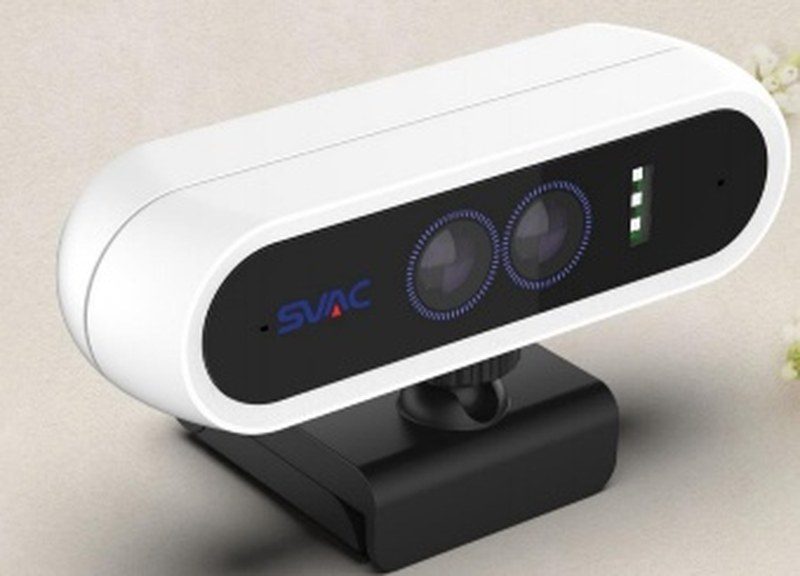
On the imaging capture side, Chenhan Digital focuses on image capture and machine vision support; the Dual-Eye Dual-Recording AI Camera Module targets scenes needing dual-stream capture and can be evaluated as a front-end hardware option for video analytics projects.
Overall, video security is shifting from "installing cameras" to "using footage to make judgments," but the pace depends on trust building: start in low-risk, reviewable scenes, prove accuracy and false-alarm levels with pilot data, then expand AI authority step by step. For supply chain and solution teams, front-end imaging quality, edge analytics, system integration and security compliance matter equally; an algorithm concept alone rarely supports long-term delivery. This article is an industry information review and does not constitute investment advice.
Comments
No comments yet. Be the first to comment.