
AI Server PCB Materials: Laminate Qualification and Lead Times
Much of the pressure from AI server upgrades lands on circuit boards and the materials behind them. As compute platforms move to higher SerDes rates, signal loss, impedance and interlayer structure on the board must be re-constrained, and laminate grades, copper foil types and glass fabric specs move up accordingly. This round of tightness differs from a normal commodity cycle: it concentrates on high-speed, high-end materials, and "capacity announced" does not equal "qualified capacity." Material certification cycles are a factor that supply scheduling often underrates.
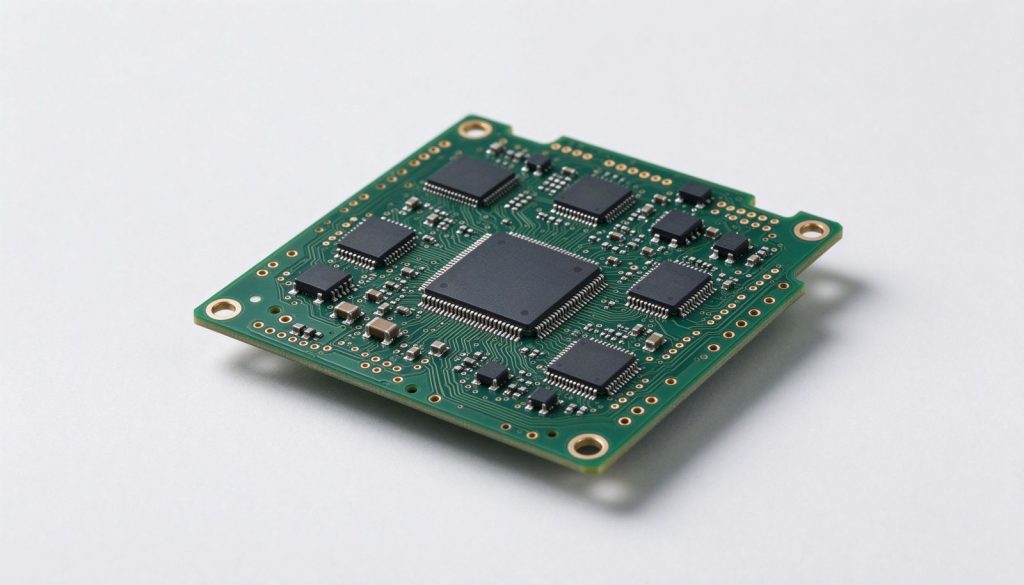
Doubling data rates pushes laminate grades up a tier
Platform generation changes directly reshape PCB layer count and material class. Comparing NVIDIA Vera Rubin with the prior GB300: the compute board moves from a 22-layer, 5-stage HDI M7 laminate to a 26-layer, 6-stage HDI M8 grade; the NVSwitch switch board moves from 24-layer M8 to 32-layer M8; the 44-layer Midplane backplane and CPX inference module boards adopt M9-grade material with Q-glass fabric and HVLP4/HVLP5 ultra-low-profile copper foil, using low dielectric loss to support long-reach 224G SerDes channels. Rubin Ultra further uses a 78-layer orthogonal backplane to replace a large number of copper cables. Per SemiAnalysis estimates, high-end high-speed PCB area in the Rubin NVL72 rack is about 2.3 times that of GB300.
Material tiers: the higher the rate, the narrower the qualified supply
Each CCL grade maps to a different rate range and resin system. M7 uses mainly modified PPO for the 112G band; M8 pairs PPO with hydrocarbon resin to cover 112G–224G; M9 raises the hydrocarbon ratio and compounds BCB, targeting 224G–448G. On copper foil, roughness steps down from standard HTE and RTF to HVLP, and HVLP4 and above is the tightest supply today; reinforcement materials such as Q-glass are also highly concentrated. Morgan Stanley's "AI Infrastructure: Materials Supercycle" estimates AI data centers contribute about 90% of CCL market increment, and roughly 84% of that increment comes from per-rack material spec upgrades and higher unit value, with only 16% from server shipment growth.
| Grade | Typical rate band | Material and application focus |
|---|---|---|
| M7 | Around 112G | Mainly modified PPO; early AI servers and high-speed switch boards |
| M8 | 112G–224G | PPO paired with hydrocarbon; current mainstream AI server compute and switch boards |
| M9 | 224G–448G | Hydrocarbon-led with BCB, paired with Q-glass and high-end foil; backplanes and next-gen platforms |
High-end and general-purpose boards are not the same supply picture
High-speed high-end side
- Strict limits on layers, size, impedance and insertion loss; little choice of material grade and supplier, with long certification cycles
- High-end CCL, specialty foil and electronic fabric are locked in first, and new capacity also anchors to high-speed laminate tracks
General-purpose FR-4 side
- Capacity and raw materials still see spillover from high-end scheduling and upstream diversion, but technical barriers and certification demands are lower
- Selection focuses on conventional reliability, cost and delivery stability, without stacking high-speed specs
How qualified capacity and certification cycles affect procurement
Material tightness cannot be judged from nameplate capacity alone. A new line must still pass the customer's electrical, mechanical and reliability validation before volume use, and that certification takes time. For high-speed material swaps, engineering teams check thermal properties such as Tg, Td, CTE and thermal conductivity, as well as Dk and Df loss at the target frequency, and adjust the stackup around the laminate; UL compliance must also be checked in advance, since a substrate change can affect the finished board's UL mark. Supply-chain reports put lead times for some CCL families at 8–10 weeks, and selected high-performance materials at 24–32 weeks. For project scheduling, laminate grade, thickness and rating should be consolidated at the design stage, with upfront DFM review to reduce later material-swap validation and stocking pressure.
On high-layer boards and board-level support, RUOMEI supplies high-precision rigid PCBs, multilayer boards and HDI for compute servers, graphics cards and industrial mainboards; the heavy-copper power boards serve power modules and power boards; the rigid-flex and FPC boards fit structural positions needing flexible interconnect, and can be paired into board-level layouts by overall machine arrangement.
Overall, AI servers are not pulling every PCB material up in price at the same time; the tightness is structural in high-speed high-end materials, where growth comes mainly from board-level spec upgrades and qualified capacity is constrained by certification cycles. For procurement and solution teams, material selection, alternate-material validation and lead-time buffers should move forward into the design stage, separating high-speed board requirements from general-purpose specs, so as not to over-spec general projects or under-estimate material certification and stocking on high-speed ones. This article is an industry information review and does not constitute investment advice.
Comments
No comments yet. Be the first to comment.