
Wireless Modules Converge: Picking BLE, Wi-Fi and LoRa by Use Case
Connectivity for smart hardware is shifting from "pick one protocol" to "combine several." A single terminal may use Bluetooth for phone pairing, Wi-Fi for data upload, and LoRa or ZigBee for low-power networking; module vendors are also packing multi-protocol support, a connectivity MCU and on-device compute into one solution. For product teams, the key in wireless selection is not chasing the newest standard, but matching protocols to data volume, power, range and network scale, then evaluating module integration, certification and bundled software.
Short-range connectivity remains the bulk of IoT
By connection structure, IoT traffic still leans on short-range radio. IoT Analytics estimates that in 2025 Wi-Fi accounted for about 32% of global IoT connections, Bluetooth about 24% and cellular about 22%, with ZigBee, LoRa and Thread making up the rest. The standards side has moved quickly in recent years: Wi-Fi 7 brings 320MHz channels, 4096-QAM and Multi-Link Operation (MLO), improving throughput and latency in congested environments; Bluetooth 6.0 adds Channel Sounding, giving Bluetooth centimeter-level ranging. The Wi-Fi Alliance predicts about 1.1 billion Wi-Fi 7 devices will ship in 2026, including about 196.1 million IoT devices, while annual Bluetooth device shipments keep expanding at a mid-single-digit compound rate. Connectivity chips are integrating NPUs, connectivity MCUs and low-power power management into one platform to support simple on-device decisions.
Four mainstream protocols divide up by data volume and range
| Technology | Characteristics | Typical scenarios |
|---|---|---|
| Bluetooth BLE | Low power, short range; pairing, control and sensor passthrough | Wearables, home sensors, Beacon positioning and phone linkage |
| Wi-Fi | High bandwidth, direct IP networking; relatively higher power | Video/image upload, gateways, desktop and fixed home terminals |
| ZigBee / Mesh | Self-forming network, large node count, wider routed coverage | Smart home lighting, switches and multi-node building control |
| LoRa | Long range, low power, small packets; limited bandwidth | Metering, energy storage, agriculture and outdoor low-frequency reporting |
Few real products rely on a single protocol. Bands and earphones keep near-field links over Bluetooth, while larger data backhaul goes to Wi-Fi or cellular; multi-node home devices use Mesh networking, with a gateway uplinking to the internet; dispersed outdoor meters and sensors use LoRa for long-range low-power reporting. Listing the data frequency, packet size and power supply of each link before choosing a protocol avoids paying for bandwidth or range the product does not need.
Modules move toward multi-protocol convergence and on-device intelligence
Single-protocol module
- Simple, cost-focused; suits single-function terminals
- Each radio is laid out separately, with more antennas and BOM items
- Adding a protocol later often means swapping the module or revising the board
Multi-protocol converged module
- One platform covers Bluetooth, Wi-Fi or multiple mesh protocols, trimming BOM
- A connectivity MCU handles pairing, protocol stacks and on-device tasks together
- Easier to add lightweight voice or sensing intelligence later
The benefit of convergence goes beyond saving board space. A unified connectivity platform can bring pairing, device binding, data reporting and OTA upgrades into one firmware logic, reducing compatibility issues from multiple protocols. Some solutions also integrate lightweight inference on the module for simple wake-up, anomaly judgment or local rule execution, keeping raw data processed on device. Energy-harvesting low-power designs have landed in a few scenarios, making some battery-free devices possible, though they remain a supplementary role for now.
What to check during selection
First verify the protocol combination matches the product link, then review the power budget: battery devices prefer low-power Bluetooth or LoRa, while always-powered terminals can consider Wi-Fi. The antenna needs reserved placement and clearance, and the effect of enclosure material on signal should be assessed. Whether the module carries RF certifications and provides reference designs and antenna materials directly affects the production cycle. On the software side, confirm the bundled SDK, pairing flow, cloud platform or APP integration, and the OTA and device management scheme. For complex projects, ask the supplier for landed cases of similar products and measured power data, not just peak figures from the datasheet.
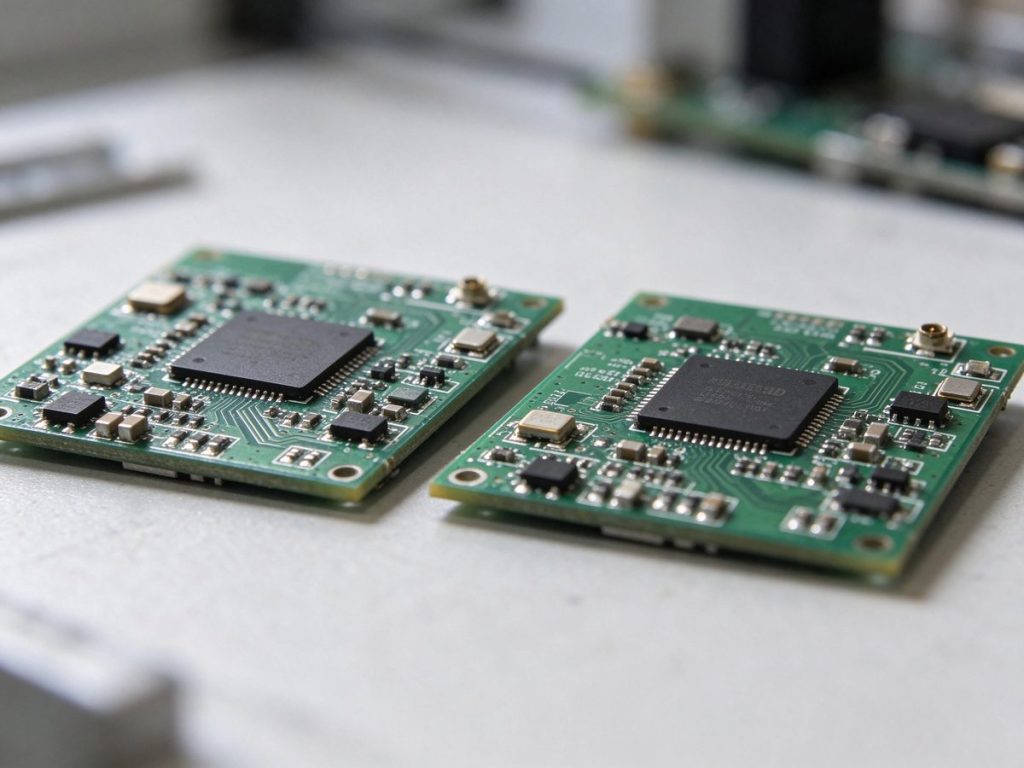
On the wireless connectivity side, the Wi-Fi / ZigBee / LoRa IoT Module and Hardware-Software Solution covers wireless networking for smart home, energy storage, metering and connected devices, with companion APP, mini-program and cloud development; the BLE/SPP and Beacon Module Series supports Bluetooth passthrough, networking and Beacon positioning in wearables, smart home and medical-health devices; Wireless-Tag (Qiming Yunduan) can be referenced as a supply side for wireless modules and embedded development.
Overall, competition in wireless modules is shifting from "which standard it supports" to "whether multi-protocol, power and on-device software can be packaged into an easy-to-land solution." For product teams, working out the link and power by scenario first, then comparing integration, certification and bundled software, controls production risk better than chasing the newest protocol alone. This article is an industry information review and does not constitute investment advice.
Comments
No comments yet. Be the first to comment.