
AI Compute Pulls High-End PCB Into a Structural Upswing
The wave of demand from AI servers and high-speed switches has pulled high-end PCB onto a track that differs from ordinary consumer boards. To understand this divergence, it is not enough to say broadly that “the PCB industry is doing well”; it matters which part of the chain a board sits in. High-layer-count boards, high-speed boards and heavy-copper power boards may all be called circuit boards, but in materials system, process difficulty and customer validation cycle they are almost two different worlds.
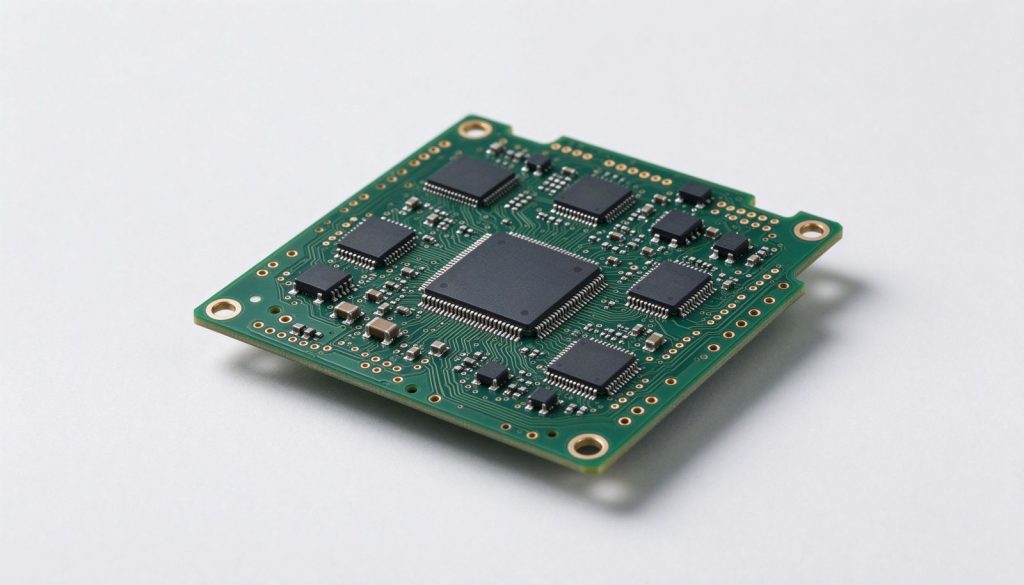
Two kinds of boards, almost two worlds
An AI compute board has to carry more layers, faster signals and larger currents, which raises the bar for CCL grade, stack-up design, impedance control, hole copper thickness and thermal management. These capabilities cannot be filled by low-end capacity switching over overnight; they require material reserves, process experience and mass-production yield to back them up. High-end HDI and high-layer-count boards therefore stay relatively tight for a period, and pricing power rests more with suppliers that have a track record in this range. Low-layer-count, generic industrial boards, by contrast, still have ample capacity and compete mainly on unit price, so a price war there is hard to ease.
| Dimension | High-end compute boards | Generic low-end boards |
|---|---|---|
| Materials / process | High-grade CCL, high layer count, heavy copper; strict impedance and thermal requirements | Generic materials, low layer count, lower process barrier |
| Validation cycle | Multiple stack-up, impedance and thermal iterations; long-term design-in once qualified | Highly standardized, quick validation; capacity switches readily |
| Supply / pricing power | Track-record suppliers stay tight, with stronger pricing power | Ample capacity, price competition is intense |
| Selection focus | Reliability record and process fit first, unit price second | Compare price and lead time within the same process level |
Do not choose boards by price per square meter alone
This split is a caution for solution teams: boards should not be chosen by unit price alone. On a compute mainboard or accelerator board, material grade and process stability directly affect signal integrity, temperature rise and long-term reliability. If price is pushed down too far on a critical board, the later rework and validation cost can far exceed the saving on the board itself. Ordinary auxiliary boards and low-layer-count interconnect boards are more cost-sensitive, and are the ones where comparing prices within the same process level makes sense.
Board types carry different thresholds
To judge whether a board shop fits compute-class needs, first look at its past delivery record on AI server mainboards, accelerator boards and heavy-copper power boards, then check its materials system, process capability and responsiveness from prototyping through small batch to volume production. The board types are not interchangeable: high-layer PCB / HDI boards, heavy-copper power boards and rigid-flex and FPC boards each carry different stack-up, copper-thickness, bend and signal requirements. A supplier with such a track record can be found in the listed vendor RUOMEI. Material, layer count, copper thickness, surface finish and impedance should be aligned early, so that a capability mismatch does not surface only at the prototype stage.
Another threshold for high-end boards is the validation cycle. Compute mainboards and accelerator boards usually go through multiple rounds of stack-up, impedance, temperature-rise and reliability iteration; once a customer designs one in, it tends to stay over a long period, and new entrants cannot easily break in on low price in a short time. Generic industrial boards, by contrast, are highly standardized, validate quickly and switch capacity readily, so price competition there is naturally more intense. Ordinary interconnect boards are insensitive to these metrics, where cost and lead time are the main trade-offs.
Comments
No comments yet. Be the first to comment.