
Immersive Imaging as a Device: Dual Fisheye and Onboard 3D
Immersive imaging used to be assembled from separate lenses, capture cards and post-production stitching, with teams solving binocular alignment, image stitching and streaming integration on their own. As all-in-one matured, dual fisheye capture, lens calibration and onboard real-time algorithms are integrated into a single device, so content creation, event documentation and live streaming can produce usable footage directly. For teams entering 3D/VR scenarios, selection has shifted from rounding up scattered components toward judging device consistency and algorithm capability.
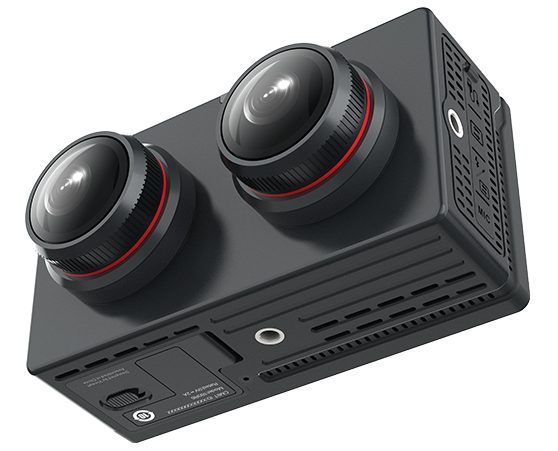
Technical build: binocular capture plus onboard calibration
The base of panoramic 3D imaging is a dual-eye fisheye module: two lenses cover a wide view, and high-precision lens calibration keeps the left and right images aligned. An onboard real-time algorithm composites the captured feed into 3D or 3DVR content, supporting one-tap recording and live streaming. Compared with separate lenses and capture cards, an all-in-one device completes binocular consistency tuning at the factory, keeping the image steadier over long viewing sessions and removing post-production stitching and alignment work.
| Dimension | Split components | All-in-one device |
|---|---|---|
| Capture and calibration | Lens and card bought separately; alignment tuned in-house | Binocular calibration done at factory; consistency guaranteed by the device |
| Algorithm location | Relies on post-production software stitching | Onboard real-time algorithm; recording and streaming output directly |
| Integration work | Team must link components and streaming pipeline | Ready out of the box; connects to existing platforms |
| Long-term stability | Depends on assembly and tuning skill | Focuses on device tuning and steady long viewing |
Scenarios: from content creation to event documentation
These devices target immersive recording, VR180 live streaming and 3D content creation, suiting event documentation, tourism and cultural recording, education and training, corporate promotion and online showcase. Selection should follow the target platform and streaming pipeline: supported recording specs, live formats and compatibility with existing content platforms are practical questions to confirm before landing, rather than relying on nominal resolution alone.
The listed VIEWPT (3D/VR180 panoramic imaging devices), with the Realia series 3D/VR180 live camera as the all-in-one product, supports early evaluation of immersive imaging solutions.
Procurement judgment: calibration and algorithm before specs
Clarify first whether the content use is recording, streaming or both, then check binocular calibration accuracy, how well the onboard algorithm supports recording and streaming, and how it connects to existing platforms and the streaming pipeline. Beyond specs, image stability over long recording sessions, lens-module calibration and follow-up tuning capability matter more for the final footage. Panoramic imaging is sensitive to left-right consistency; weak calibration or algorithm can cause fatigue and misalignment over long viewing. Exact configuration and delivery should be confirmed with the supplier.
Comments
No comments yet. Be the first to comment.