
Low-power Wi-Fi and Edge AI on a Single Chip for Battery-powered IoT
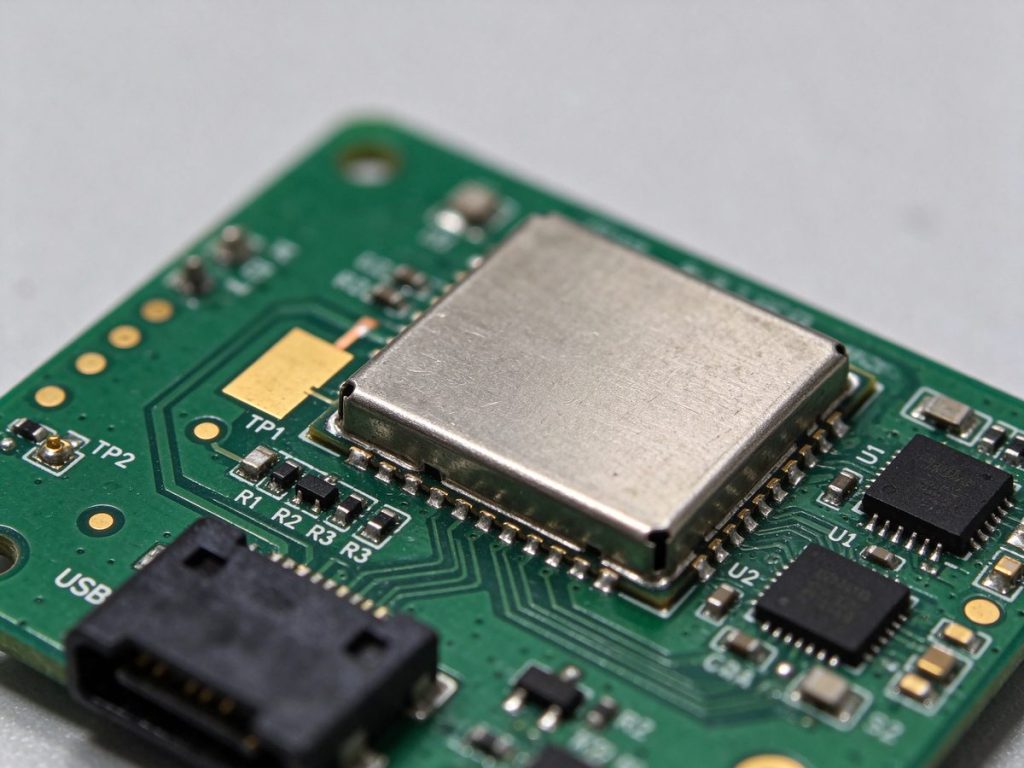
Battery-powered smart devices have long steered clear of Wi-Fi: the standby current is too high for a small battery, so they rely on Bluetooth, Sub-G or LoRa and leave always-on networking to plugged-in equipment. As ultra-low-power SoCs put Wi-Fi, Bluetooth, Thread and lightweight on-device inference on one die, that power barrier is coming down. For hardware teams, this is not simply swapping a wireless chip; it means recalculating battery life, connection frequency and local compute.
Why battery devices used to avoid Wi-Fi
Power is the core reason. Keeping Wi-Fi alive needs periodic transmit and receive, and RF active current sits well above BLE, so an always-online device drains fast. The traditional approach picks protocol by power condition: plugged-in gateways, sockets and cameras use Wi-Fi or wired links, while battery locks, sensors, wearables and meters use BLE, Thread or LoRa, trading bandwidth and responsiveness for runtime.
This division still holds, but protocols rely on gateways to forward data, the link grows longer, and local judgments move to the cloud, raising network dependence and limiting responsiveness and privacy. When a device needs simple identification or state reporting locally without a cord, the old mix starts to strain.
Connectivity and local judgment on one chip
Nordic recently introduced the nRF71 Series ultra-low-power SoCs, integrating Wi-Fi, Bluetooth LE, Thread and edge AI on one chip. Standby power is up to about 20 times lower than the previous nRF70 Wi-Fi products, targeting battery devices in smart home, wearables and industrial IoT, while reusing existing software and toolchain. The direction is to let battery devices afford Wi-Fi and run lightweight inference locally, instead of sending every judgment to the cloud.
Lower standby current does not mean a whole device runs for years. Runtime still depends on transmit duty cycle, sampling rate, display and peripheral power, battery capacity and power management; the chip only loosens the wireless segment. Edge AI here concentrates on wake-up, simple classification and anomaly detection—complex models stay at the gateway or cloud.
Plugged-in connected devices
- Stable power, generous budget; a high-bandwidth link can stay resident
- Suited to cameras, gateways, displays and fixed terminals that aggregate data
- Selection focuses on throughput, concurrent connections and long-term stability
Battery-powered devices
- Runtime first; connect by event or periodic wake-up, avoiding high-power keep-alive
- Suited to locks, sensors, wearables, meters and inspection nodes doing local checks
- Selection focuses on standby current, duty cycle, protocol coverage and low-power software
Reckoning power, networking and compute in selection
Chip, module and whole device are three layers. For integrators, a module packages RF, protocol stack and interfaces to shorten certification and development; when structure, power and device coordination are needed, a PCBA and power management sit alongside. A BLE/SPP and Beacon Module Series fits near-field low-power links and positioning; Wi-Fi/ZigBee/LoRa IoT Modules and Hardware-software Solutions cover multi-protocol networking and platform development. For projects needing more than one radio, an IoT Comms Module Solution (Wi-Fi / Cellular / BLE / LoRa) picks the standard by scenario, while a Wireless Connectivity Modules & PCBA Solutions brings the module together with board design and embedded software.
Judgments for procurement and solution teams
First map how the device is powered: plugged in, replaceable battery, or charged once for months. Then decide whether networking is always-on or event-triggered, and whether wake-up, classification or reporting must be local. These points set whether a resident high-bandwidth link or a low-power wake-up fits, and how much edge compute is needed. Low power does not depend only on datasheet standby current; wake-up policy, transmit timing and peripheral sleep matter as much. Ask suppliers about power-optimization plans, antenna and RF coordination, and repeatable runtime records from similar devices. Grade protocols by scenario first, then choose an off-the-shelf module or joint PCBA development, avoiding extra power and cost for unused bandwidth and compute.
Comments
No comments yet. Be the first to comment.