
Machine Vision Moves to 3D Sensing as AI Cameras Tie Into Robotics
Machine vision on the factory floor is shifting from a standalone inspection device into the sensing front end of robots and automated lines. Two directions are clear: AI algorithms are moving directly into the camera body, and traditional two-dimensional pattern matching is gradually giving way to three-dimensional sensing that carries depth information. For manufacturers and solution teams, selecting vision hardware is no longer a matter of comparing resolution and frame rate alone; the real question is whether the sensing system can close the loop with picking, positioning and inspection.
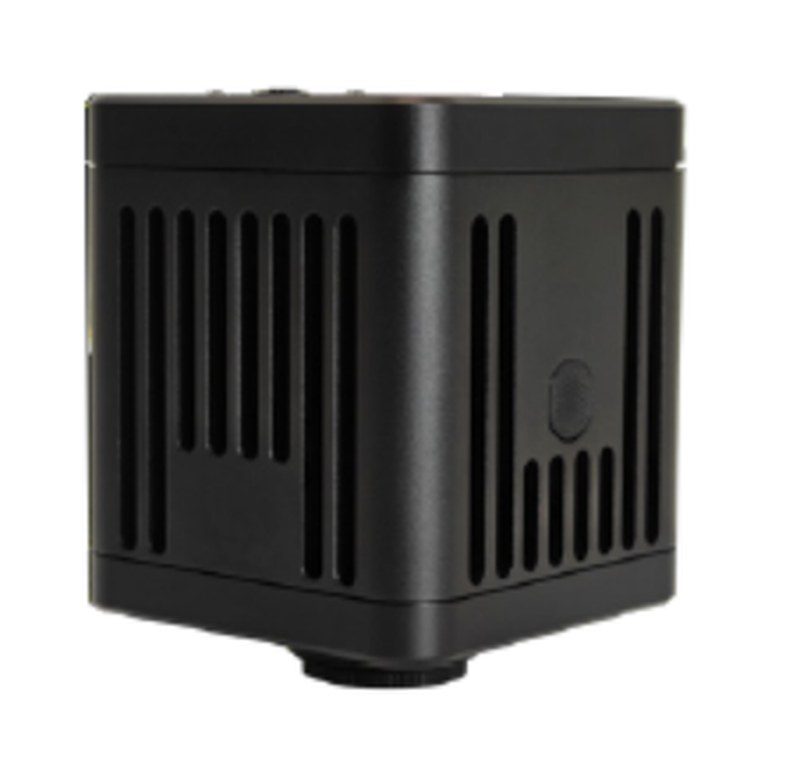
Deployment: lens and light source driven by one toolchain
In a vision system, the light source provides illumination, the lens feeds the image into the camera, and the algorithm handles recognition, measurement, localization and defect detection. In the past, lens and light source often each needed a separate external controller, with integration tuned piece by piece. Recent offerings bring coordinated lens-and-light-source control: one camera and a single software development kit drive both ends, removing the need for a dedicated external controller. This looks like a tool-level improvement, but in practice it cuts integration workload and concentrates on-site tuning.
Sensing upgrade: from 2D patterns to 3D volume
Early machine vision relied mostly on 2D pattern matching, comparing features under standard parts and fixed lighting. For a robot to recognize a workpiece, judge its pose and complete a grasp, a flat image alone does not carry enough; posture, motion and contact feedback are also needed. Industry analysis consistently lists 3D vision, motion capture and tactile acquisition as directions worth watching: three-dimensional imaging supplies richer spatial information for complex inspection and picking, while the camera module still has to balance size, cost and measurement accuracy. That balance depends on the chip, module, production calibration, optical design and algorithm working together.
Demand validation: semiconductors, lithium batteries and optical modules
Release pace differs across downstream markets. Public reports offer indirect evidence: revenue from AI system solutions at optics and vision vendors is growing faster than traditional business, with stronger orders in semiconductors, lithium batteries and automotive, while 3C electronics stays relatively flat; some vendors note that data-center demand is driving optical communications and AI-infrastructure visual inspection, and embodied-intelligence data collection has begun to take shape. These signals show the AI upside in vision is being realized, but profit improvement and business expansion do not move in lockstep, and sustained landing still has to be proven.
The listed Chenhan Digital (imaging capture and machine vision), together with the industrial and depth cameras and dual-eye dual-recording AI camera module, can be assessed early for inspection, positioning and image-acquisition scenarios.
| Dimension | Traditional 2D rule-based vision | AI 3D vision |
|---|---|---|
| Information | Flat patterns and edge features | Spatial pose, depth and volume |
| Typical tasks | Standard-part positioning, presence checks, rule-based defects | Complex picking, curved-surface inspection, loose-part recognition |
| Data needs | Fixed rules and templates, low sample requirement | Training samples and on-site calibration |
| Integration | Mostly a standalone inspection station | Closed loop with robots and motion control |
Procurement judgment: define the task before choosing the sensing dimension
For solution and procurement teams, break down the on-site task first: whether it is presence and defect judgment at a fixed station, or the pose and depth information a robot grasp needs, then work backward to the camera dimension, algorithm and calibration investment. Whether vision can enter a production process depends heavily on accumulated process data and scenario fit; suppliers who know the line and hold long-term data records are more likely to make sorting, welding and inspection run steadily. Beyond sharpness on the spec sheet, optical design, calibration consistency and on-site track record deserve priority.
Comments
No comments yet. Be the first to comment.