
Appliance Controller Boards Face Higher PCBA Design Bar
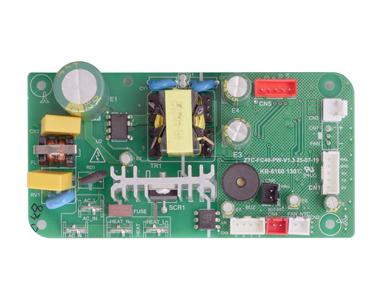
The controller boards in small and large home appliances are turning from a board that simply executes commands into the most concentrated smart node in the machine. Where choosing a controller board once mainly checked whether the function worked, connectivity protocols, energy-efficiency constraints, safety redundancy and miniaturization now press on PCBA design together. For appliance brands and solution teams, understanding this rising bar matters more than simply finding a shop that can solder; the board's design capability sets the upper limit of the whole product's experience and its launch rhythm.
Connectivity: wireless protocols become standard, signal integrity must survive the kitchen
Wi-Fi, Bluetooth, Zigbee and protocols such as Matter are moving down from premium models into more ordinary appliances. The controller has to carry the wireless module while managing power and signal integrity. Kitchen environments are metal-heavy and enclosed, an unfavorable setting for radio signals; if board layout, antenna position and routing are not considered early, adding connectivity later often means another board revision. Industry observations treat secure wireless connection and updatable firmware as baseline capabilities on new appliance boards, not add-ons.
Efficiency and safety: sensor feedback and fail-safe protection enter the design brief
Tightening energy labels and efficiency rules push the board toward finer optimization of power management, sensor feedback and standby power: sensors collect temperature, load and running state, and algorithms then adjust heating, operation and standby cycles. Expectations on safety are also rising, with protection against overheating, overcurrent, moisture and component failure; designs increasingly adopt redundant sensing and fail-safe architectures so a single fault does not directly compromise machine safety. These capabilities are not proven by a bring-up sample; they have to cover edge conditions through repeated validation.
Miniaturization: higher power density and high-density packaging rise together
Products are getting thinner and more compact, leaving less room for the board while adding more components. Industry materials note that high-density packaging now uses finer-pitch components and stacked capacitors to hold more functions without enlarging the board; this raises the bar for routing density, soldering process and board material selection. At the same time, environmental compliance such as RoHS, REACH and WEEE is no longer optional, so material choice and recyclable design have to be considered early.
Directions to consider up front in design
- Wireless protocol choice with antenna and routing layout, fitted to metal kitchen environments
- Co-optimization of power management, sensor feedback and standby power
- Overheat, overcurrent and moisture protection with redundant sensing and fail-safe architecture
Points to check in validation and delivery
- Reliability and long-term stability under edge operating conditions
- Soldering and board-material process for high-density, fine-pitch packaging
- Compliant materials, firmware updates and maintainability for after-sales
Judgment for brands and solution teams
The collaboration model around controller boards is also changing: joint R&D and Home Appliance Controller PCBA Custom Solution between upstream chip makers and downstream appliance brands take a larger share, and product iteration cycles are compressed. For procurement and solution teams, it helps to write down connectivity protocols, efficiency targets and safety levels at the project-definition stage, then work backward to board design and validation plans. When evaluating solution providers, look at their design track record in multi-protocol connectivity, sensing protection and high-density packaging, rather than comparing SMT unit price alone. Competition among appliances is increasingly decided one layer up, at the controller board.
Comments
No comments yet. Be the first to comment.