
Low-power Edge AI Cameras for Unattended Sites: On-device Inference
Many sites that need watching do not actually require 24-hour video streaming back. Unattended locations such as construction yards, forest edges, warehouse perimeters, stations and farmland mainly need evidence when a person or anomaly appears, and low power the rest of the time. This wave of edge AI cameras puts recognition compute into the camera itself; together with event-triggered capture and low-power standby, it lets off-grid or hard-to-wire sites run visual monitoring. For solution teams, the key selection question has shifted from whether the camera captures clearly to how the capture mode, power budget and uplink link are matched.
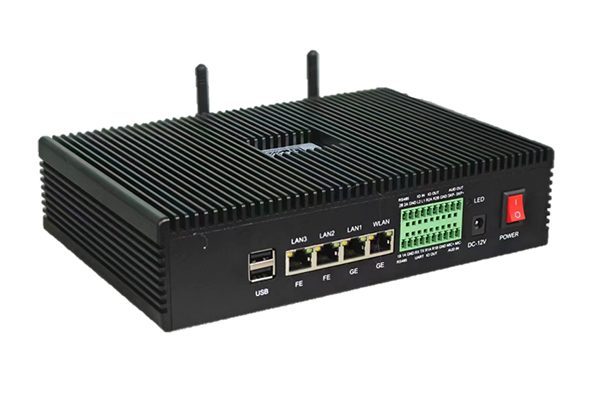
Recognition moves from the back-end box to the camera
An older smart-vision setup has the camera shoot while an edge box or server handles recognition. As light SoCs with NPUs move into camera modules, part of detection can run on the camera itself: faces, vehicles, intrusions or helmets are recognized locally, and only matched results or snapshots are uploaded, removing the need for a dedicated compute box. Whole-device power can stay within a few watts, with PoE carrying both power and data over one cable, which keeps mounting locations flexible.
It helps to draw the capability line. On-device models suit wake-up, simple classification and object detection; complex behavior analysis, multi-object tracking and large-model understanding still sit at the gateway or cloud. Camera local storage and bandwidth are also limited, so not every judgment should be pushed to the edge. In deployment, decide which recognition stays in the camera and which goes back for processing.
Count power by capture mode, not by default continuous streaming
Power at an unattended site depends heavily on how images are produced. Structured event data, event-triggered snapshots, periodic photos and continuous video streaming differ by one to two orders of magnitude in average draw: continuous streaming costs the most, while capturing only on a hit or keeping an image at intervals uses far less standby energy. Replacing continuous RTMP streaming with on-device recognition plus MQTT event reporting is a common low-power outdoor approach; paired with a small battery and solar panel, off-grid sites can run for extended periods.
Outdoor deployment also solves protection and uplink. The camera housing must withstand rain, dust and temperature swings, and an external antenna keeps the link alive in weak-signal spots. Battery-powered nodes sleep between captures and wake on demand for communication. In locations without mains power such as forestry, oilfields or islands, the power budget, panel and battery capacity must be calculated together against local sunshine days and autonomy margin, not just against the camera's rated draw.
Continuous monitoring sites
- Stable power or wired link; scenarios requiring live video and playback review
- Suited to fixed sentry posts, gates, workshops and key equipment rooms
- Selection focuses on image quality, concurrent channels, long-term stability and storage
Low-power capture sites
- No mains or hard to wire; mainly event alarms and periodic snapshots
- Suited to perimeters, forestry, stations, farmland and outdoor inspection nodes
- Selection focuses on standby current, trigger sensitivity, ingress protection and link runtime
Choosing modules and complete-device support
Deployment follows layers. The camera module handles imaging and on-device inference; the wireless video and low-power scheme handles return link and standby; the edge analysis unit aggregates and reviews multiple channels; the complete bullet or dome camera targets fast deployment. For integration projects, start with mature modules that pair imaging and communications, then build structure, power and firmware around them. A Wireless Video Transmission and Low-power Camera Solution focuses on the return link and standby design; a USB and AI Vision Camera Solution fits bringing imaging and local recognition into an existing platform; a Edge AI Video Analytics and Black-light Camera Solution covers analytics in low-light scenes; an Edge AI Compute Box and 4G/5G Smart PTZ Camera targets multi-channel access and rapid site setup.
Judgments for procurement and solution teams
First decide what the site must answer: live viewing, or retrievable images after an event. Most perimeter and outdoor scenarios are well served by event triggers plus periodic snapshots, without defaulting to continuous streaming. Then check power and wiring: mains availability, cable feasibility and sunshine conditions—these set the camera form factor and energy configuration. When evaluating suppliers, look beyond resolution and compute at uplink stability in weak networks, measured battery runtime, and whether false-alarm rates keep dropping with local samples. The value of low-power vision is not packing cameras densely, but letting each site report the events that matter with minimal power, cutting wasted backhaul and manual watch.
Comments
No comments yet. Be the first to comment.