
Cabling Beyond Unit Price: Connectors and Consistency Decide
In hardware projects, cables and connectors are often left to the last procurement stage. By the time cabling a server room, retrofitting surveillance or networking smart hardware, teams find bandwidth capped, video noisy or connectors intermittent, and the root cause usually sits in this most overlooked low-voltage wiring. Structured cabling, security cables and optical cabling each carry their own requirements; selection should not come down to unit price alone, because conductor material, shielding, jacket rating and accessory matching all affect long-term reliability.
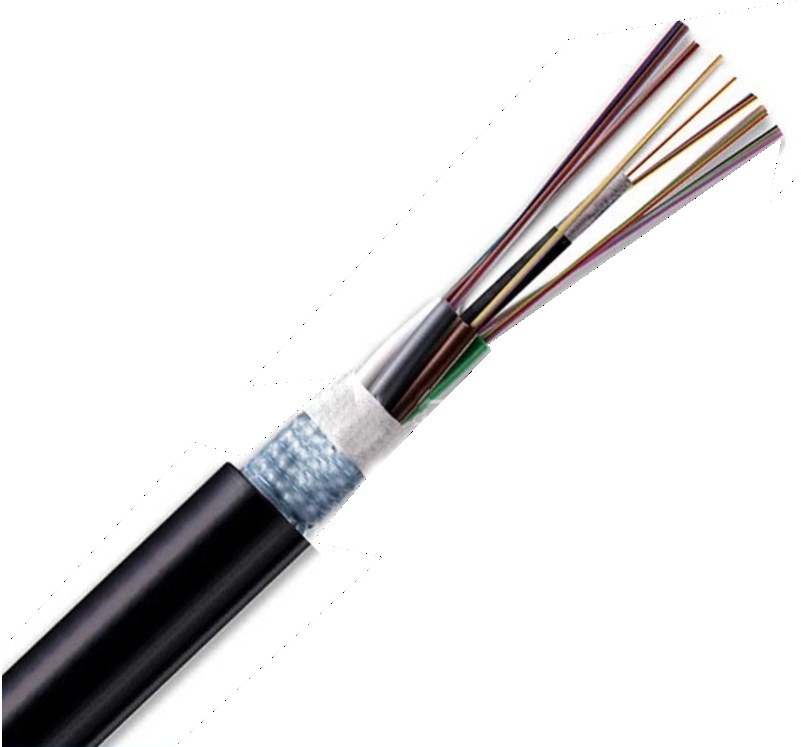
Three cabling lines, each with its own job
Structured cabling carries network and voice traffic: Cat5e and Cat6 LAN cables together with patch cords, RJ45 plugs and patch panels determine internal bandwidth and signal quality. Security cables carry power and signals, with flexible cords and coaxial cables running to surveillance, access control and alarm loops. Optical cabling targets long-distance, high-bandwidth links, where indoor and outdoor optical cables, drop cables and fiber patch cords pair with splicing or connector accessories. The conductor, insulation and jacket requirements differ across these three groups, and mixing them casually tends to leave interference and attenuation problems.
| Dimension | Structured cabling | Security cables | Optical cabling |
|---|---|---|---|
| Main use | Network and voice traffic | Surveillance, access control, alarm loops | Long-distance high-bandwidth links |
| Typical products | Cat5e/Cat6 LAN, patch cords, RJ45 plugs | RVV/RVVP/RVS cords, coaxial cables | Indoor/outdoor fiber, drop cables, patch cords |
| Focus | Bandwidth grade, crosstalk, contact reliability | Power capacity, noise immunity, jacket weathering | Loss, connector craft, matching accessories |
Selection starts with conductor and accessory consistency
The foundation of a cable is its conductor. Oxygen-free copper conducts steadily with low attenuation, while recycled or impure copper is more likely to fail over distance and bandwidth. Shielded versus unshielded should follow the on-site electromagnetic environment: where power lines run in parallel and equipment is dense, shielded structures deserve priority; ordinary office and home scenarios often do fine with unshielded. Jacket material relates to flame retardancy and environmental friendliness: PVC keeps cost down, while low-smoke zero-halogen (LSZH) is the safer choice in enclosed spaces and crowded venues.
Accessory consistency is easily overlooked. LAN cables, plugs, patch panels and patch cords must match at the same grade; if the cable meets spec but the connector is poorly made, the link still underperforms. On the fiber side, connector types (SC/ST/FC/LC), splicing quality and patch-cord loss need to be checked together. For batch delivery, test reports, batch consistency and supply stability matter more than the price of a single reel.
The listed HAIKANGSU (network wire, fiber and low-voltage cables), together with the cabling, security and optical cables and connectors, supports early comparison for structured cabling, surveillance and low-voltage projects.
Procurement judgment: fix scenario and bandwidth before price
Define the use scenario, transmission distance, bandwidth requirement and on-site EMI environment first, then work back to cable category, grade and accessory plan, rather than picking the cheapest reel first. When evaluating suppliers, look at conductor material, test reports, ROHS and other compliance records, and whether patch cords, connectors and patch panels are supplied as a matched set. Cable unit price is a small share of total product cost, but once a link fails, troubleshooting and rework often cost far more than the wiring itself. Setting the grade and matching accessories up front means fewer site visits and fewer cable replacements later, which is the saving that actually counts.
Comments
No comments yet. Be the first to comment.