
Small-Display Selection: PMOLED and TFT-LCD by Scenario
On small displays in wearables, health monitors and industrial instruments, selection often starts with the wrong question: comparing resolution first. What actually decides the route is the ambient light, the need for color, battery constraints and operating temperature. PMOLED, transmissive TFT-LCD and transflective screens each hold a segment of the market; define the scenario first, then size, interface and power matter more than piling on parameters.
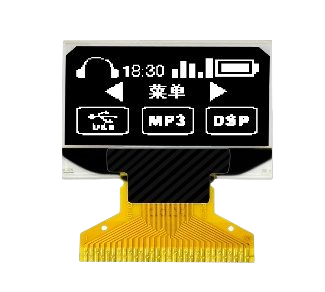
How the three technology routes divide up
PMOLED self-illuminates from organic material, offering high contrast, a thin profile and low standby power, suited to monochrome or area-color small auxiliary displays; color capability and long-term life are the trade-offs to weigh. A transmissive TFT-LCD relies on a backlight, with mature color and controllable cost, suited to indoor always-on information displays. A transflective or reflective screen reads on ambient light outdoors with little backlight demand, suited to instruments and portable devices in strong light.
| Dimension | PMOLED | Transmissive TFT | Transflective / reflective |
|---|---|---|---|
| Color | Mostly monochrome or area color | Mature color rendering | Color or monochrome, practical focus |
| Look | Self-lit, high contrast | Even backlight | Readable under outdoor reflection |
| Power | Low standby power | Higher backlight power | Low outdoor power |
| Typical use | Wearable auxiliary displays, rings and bands | Indoor instruments, health devices | Outdoor instruments, portable terminals |
| Life focus | Blue subpixel decay | Backlight and panel life | Reflective layer and long-term reliability |
Scenario sets the parameters: from health monitors to outdoor industrial use
Health monitors such as clip pulse oximeters and thermometers sit around one inch, valuing low power, high contrast and medical-environment fit; auxiliary displays on smart rings and bands need to be ultra-thin and curve-fitting; petrochemical and power-inspection instruments and automotive auxiliary displays call for wide temperature range, vibration resistance and wide viewing angle. When sizing, count the overall thickness after the FPC leads out, not just the panel itself.
Procurement judgment: fix ambient light and color first, then size and interface
For procurement and solution teams, confirm first whether the device runs indoors or outdoors, whether color is mandatory, and how tight battery pressure is, then work back to display type, size and driver interface. Put wide-temperature range, panel life, overall thickness including the FPC and long-term supply into the requirements. A small display may look cheap, but rework and experience loss from picking the wrong route often cost more than the screen itself.
The listed LIMITO (small OLED / TFT-LCD displays) covers PMOLED small displays (0.32–1.71 in), transmissive TFT-LCD displays (0.71–4.3 in) and transflective / reflective outdoor low-power TFT-LCD screens for scenario-based early comparison.
Comments
No comments yet. Be the first to comment.