
mmWave Radar Fills the PIR Blind Spot: Presence Sensing by Band
Traditional occupancy sensing mostly uses passive infrared (PIR): low cost and simple circuitry, but it only reacts to heat change and limb movement, so a person sitting still can be missed, and curtain sway or a pet passing by can trigger false alarms. What mmWave radar fills is exactly this blind spot: it transmits electromagnetic waves and reads back micromotion reflections to judge whether someone is present, how far away, and whether they are stationary, without capturing images and with milder privacy concerns. Lighting, HVAC, fresh air and security linkage are shifting from "respond only to motion" to "know whether someone is there."
Choose the three sensing methods by scenario, not price
PIR remains the common low-cost motion detection option, suited to corridors, stairwells and other pass-by triggering. 24GHz mmWave balances low power, cost and compatibility, and is the more mature route for small indoor spaces. The 60GHz band offers wider bandwidth and higher resolution, supporting multi-person tracking and micromotion such as breathing and heart rate, for high-precision energy control and occupancy counting. The three are not simple substitutes; budget, space size and the required detection depth decide which one fits.
| Method | Sensing capability | Better-fit scenario |
|---|---|---|
| PIR | Detects heat change from motion; stationary people easily missed; low cost | Pass-by lighting control in corridors, stairwells and restrooms |
| 24GHz mmWave | Detects micromotion and presence; balanced power and cost; mature in production | Lighting and HVAC linkage in homes, offices and meeting rooms |
| 60GHz mmWave | High resolution; multi-person tracking and breathing/heart-rate micromotion; band must comply with local rules | High-precision occupancy stats, sleep breathing monitoring and high-positioning-accuracy use cases |
Algorithm matters more than band for real experience
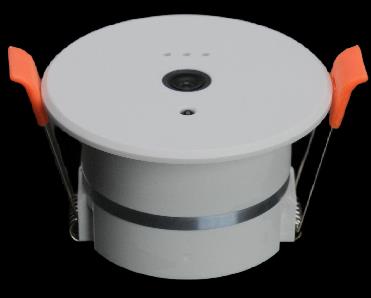
On the same radar, the experience gap sits mainly in the algorithm. A mature scheme distinguishes motion, micromotion and stationary states, and filters false triggers from curtain sway, plant movement, light changes and pets. The output is not just "present/absent" but distance, rough position and headcount. For product integration, a mmWave Radar Sensing Module & Scenario Solution configures sensor module, algorithm output and cloud connection by scenario. On the finished-product side, a ZD101 Ceiling Occupancy Sensor targets meeting rooms, offices and HVAC control by occupancy, while a PIR Motion Sensor Switch Series remains a low-cost transitional option for retrofitting existing lighting circuits.
Details to check during deployment
Mounting height, detection angle and obstructions directly affect results: for ceiling installation, verify the coverage radius and avoid metal shielding above and around the radar. The communication protocol should match the existing smart-home or building control system; common options include Wi-Fi, Bluetooth, ZigBee and Matter. Band selection must also confirm local radio regulations, and 60GHz products should show band labeling and relevant certification to avoid compliance issues after launch. A radar captures no image, but its occupancy data still carries spatial information, so data use and retention should be defined when connecting to a platform.
Takeaway
Presence sensing is upgrading from "detect motion" to "judge occupancy." PIR holds the low-cost pass-by baseline, 24GHz mmWave carries most indoor linkage needs, and 60GHz extends toward high-precision tracking and vital-sign sensing. When selecting, first clarify whether the need is pass-by, presence or stationary breathing, then check band compliance, mounting conditions and system integration; that lands closer to stable real-world experience than comparing radar bands alone.
For product teams, a common pitfall is specifying the radar before defining the linkage logic. A sensor that only reports a raw presence signal leaves the host to handle debounce, timeout and false-release rules, while a module that outputs cleaned occupancy state, headcount and distance is easier to tie into lighting and HVAC schedules. It is also worth piloting in the actual room before a full rollout: ceiling height, partition material, furniture layout and even the position of plants or curtains can change detection behavior, and a short on-site trial usually reveals issues that a datasheet cannot. Across smart homes, offices and commercial spaces, the value of presence sensing ultimately shows up as comfort maintained while empty-space conditioning is cut, which is why stable, low-false-trigger detection matters more than chasing the highest band number.
Comments
No comments yet. Be the first to comment.