
Silicon-Carbon Anodes: Density Up, Life and Charging Still Trade Off
Battery life and thinness keep pulling in opposite directions in consumer electronics. When chassis thickness cannot shrink further, battery space is compressed; to pack more energy into a fixed volume, the energy density of the cell itself becomes unavoidable. Silicon-carbon anodes are being discussed more often because they offer a route to raise density beyond graphite, but silicon's volume swelling, cycle life and fast-charging penalties have not been solved along with it. Terminal selection still has to be weighed by use case.
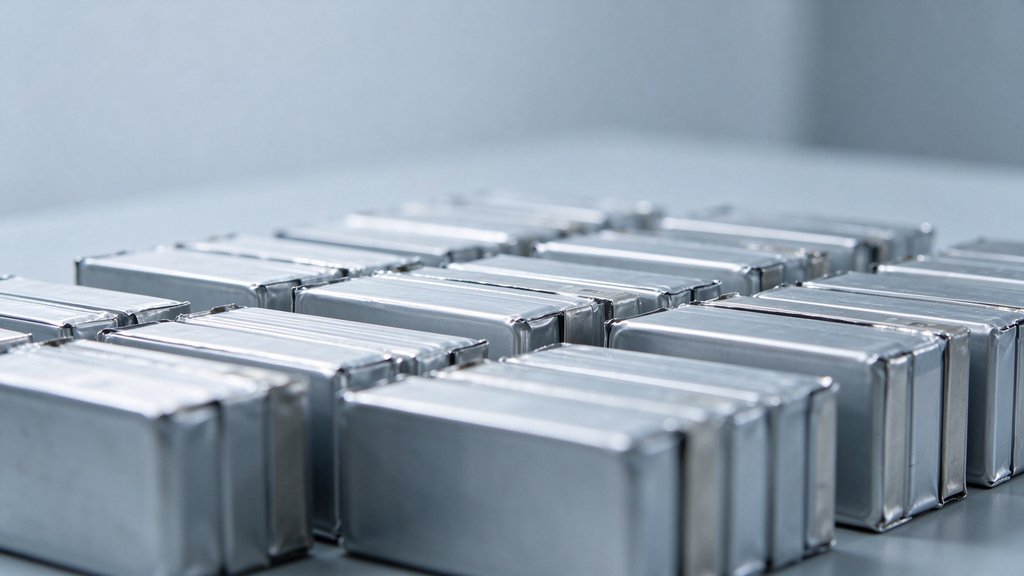
Why silicon-carbon is back on the agenda
The anode stores lithium ions during charging and releases them during discharge, and it is a key factor in cell energy density. Graphite, both natural and artificial, remains the mainstream choice today. According to a November report from GF Securities' electronics team, graphite has a theoretical specific capacity of about 370 mAh/g, while silicon reaches about 4200 mAh/g, roughly 11.4 times graphite. However, silicon can swell by about 300% during lithium intercalation, and repeated expansion and contraction directly affect cycle life. A silicon-carbon composite bonds silicon with carbon-based materials such as graphite and porous carbon, using carbon's conductivity and structural stability to cushion swelling, then blends a portion into the graphite anode to raise specific capacity.
The boundary of each anode route
Silicon-carbon is not a full replacement for graphite. Graphite systems are mature in process, stable in cycling and controlled in cost, and remain the baseline for most mid-range models and conventional power products. Silicon-carbon holds an advantage in high specific capacity, but it must manage interface stability from swelling, cycle decay and lithium plating under high rates; the higher the silicon content, the stricter the requirements on cell design and material support. In the production figures cited by the report, some cell makers already mass-produce around 10% silicon content, some shipped products sit in the 10%–15% range, and lab samples exceed 20%; high-silicon solutions are still being advanced for AI PCs and AI glasses.
| Route | Strengths | Main constraints |
|---|---|---|
| Graphite anode | Mature process, stable cycling, controllable cost and supply chain | Limited specific-capacity ceiling, little room for high-density expansion |
| Silicon-carbon anode | High specific capacity, helps add capacity at fixed volume or shrink the cell | Silicon swelling affects cycle life; stricter demands on interface process, rate and charging design |
Consumer electronics and small-power drives differ in requirements
Consumer electronics side
- Flagship capacity builds, foldable thinning and AI-glass miniaturization all demand battery life within tight space, and customers will pay more for volumetric energy density
- Thickness, weight, daily cycle count and charging experience matter most; silicon content must balance density against life
Drones and robotics, small-power side
- Unit weight directly affects flight time and continuous operation, so gravimetric energy density carries more weight
- Beyond density, discharge rate, cycle life and operating temperature must match the power load
Citing estimates from the Forward-looking Industry Institute, the report puts smartphone silicon-carbon anode penetration at 6.6% in 2025, rising to 11.3% in 2026 and 27.0% by 2029. EVTank data show global silicon-based anode shipments of about 40,000 tonnes in 2024, projected to reach 600,000 tonnes in 2030. Density gains do not automatically mean a better experience: public hands-on feedback notes that some large-battery Si-C models deliver lower average charging power through a full charge and take longer to top up, so density, endurance and fast charging still involve real trade-offs.
What to check in a terminal project
For wearables, earbuds, smart cards and small smart-hardware projects, cell selection should start with available space and target endurance, then back into the volumetric density required, rather than fixing the material route first. A silicon-carbon proposal should bring cycle count, rated and actual discharge rate, operating temperature range, charging rate and protection-board coordination into the same evaluation list; during sampling, verify capacity retention after high/low temperature and cycle aging. For space-constrained pouch cells, outline dimensions, thickness tolerance and tab layout should be confirmed with the cell maker before tooling.
For small pouch battery support, Aibangda Technology supplies polymer pouch cells for wearables, earbuds and smart cards, with custom outline and thickness to fit terminal space, matching small battery projects with different capacity and discharge requirements.
Overall, silicon-carbon anodes are a viable route to lift energy density in consumer electronics and small-power products, but the outcome is not a one-way positive: it rebalances density, life, fast charging and cost. What to watch next is real-world cycle life of high-silicon solutions, yield at scale and the pace of cost reduction. Until material maturity lands, selecting by scenario is safer than chasing the highest density alone. This article is an industry information review and does not constitute investment advice.
Comments
No comments yet. Be the first to comment.