
Thermal Imaging Beyond Night Vision: Handheld vs On-board Modules
Thermal imaging used to sit in specialist fields like night vision, security and electrical inspection, with expensive devices and operators needing dedicated training. As uncooled microbolometer processes mature and costs gradually come down, infrared temperature measurement is becoming a general-purpose sensing capability: some teams carry devices to the field for long-tail inspections, while modules are fixed onto equipment and drones for continuous monitoring. The two forms do not replace each other; they divide the work according to inspection rhythm and deployment conditions.
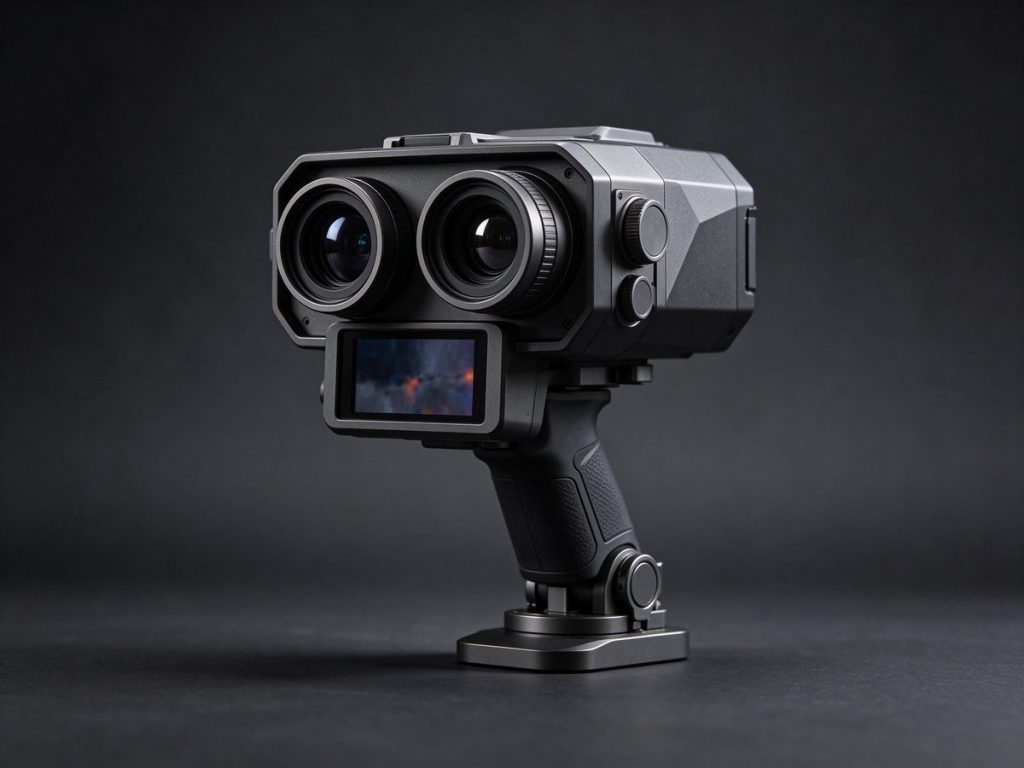
From specialist device to general sensing unit
The fastest civilian adoption today is the uncooled route. Vanadium oxide (VOx) microbolometers use MEMS processes to make detectors smaller and more stable, pairing lenses and image processing circuits into an integrable thermal module. Cooled detectors continue to serve high-end defense and aerospace on multispectral, high-resolution performance. As costs fall, infrared use has expanded from night observation to temperature anomaly detection, equipment condition inspection and area security, with new demand coming mainly from new-energy production quality checks, electrical preventive testing and industrial predictive maintenance.
When a solution lands, modules and complete cameras sit at two levels. For integrators, a module pairs detector, lens and algorithm interface to embed into drones, robots or fixed stations; for field work, a complete camera adds screen, battery and grip for immediate temperature imaging. A VOx Thermal Module & AI Fusion Solution packages sensing, thermal output and AI temperature-rise interfaces for secondary development, while Industrial Thermal Imaging Cameras cover handheld monocular, fused binocular and vehicle-mounted forms for different inspection stations.
Handheld portable inspection
- Routes are not fixed; the person walks to equipment, cabinets and cable trays on site
- Weight, battery life, image clarity and report export matter; used to occasionally recheck online blind spots
- Suits long-tail points, temporary troubleshooting and fault review; hard to run 24/7 continuous watch
Fixed on-board modules
- Critical equipment, busbar joints and rooms stay in place, needing long-term continuous temperature trend monitoring
- Modules connect to edge compute or a platform, alarming on thresholds and trends with less manual patrol
- Deployment must consider protection rating, lens field of view, power, communication and long-term calibration
Where thermal imaging sits in the equipment O&M chain
Infrared measurement itself only returns a temperature distribution; the real value comes from connecting the thermal image to judgment and closed loop. Inspection first spots a temperature rise, then load, ambient temperature and history are weighed to decide whether it is normal heating or a loose contact, overload or cooling failure, before records are archived and review scheduled. Fixed points hold continuous watch, handheld devices do spot confirmation and mobile checks, and both feed the same O&M record for a more complete picture than either alone.
Points easily overlooked in selection
Resolution and temperature range are only the basics. On site, check whether the lens field covers the target distance, whether thermal sensitivity can resolve small temperature differences, whether the camera protection rating suits the workshop or outdoors, and whether exported data can connect to the existing O&M platform. For online deployment, long-term calibration drift and lens contamination should also be in the maintenance plan. Engineering support from the supplier matters as well: a provider focused on industrial and security scenarios such as CE Thermal Vision can support module selection, camera form and algorithm integration by use case.
Takeaway
This round of thermal imaging growth is essentially infrared sensing moving from "specialist device with a dedicated operator" to "configured by scenario." Fixed modules carry continuous monitoring, handheld cameras carry mobile inspection, and AI fusion makes temperature anomalies easier to catch in time. For procurement and solution teams, sorting out which points need long-term watch and which are mobile checks first—then deciding on modules, cameras or a combination—lands closer to real O&M results than comparing detector resolution alone.
One practical caution: thermal data should always be read alongside load and ambient conditions. A hot spot under heavy load may be normal, while a modest rise on an idle bearing can indicate a developing fault, so a standalone temperature threshold often produces both missed issues and false alarms. Integrators should plan for baseline recording, trend comparison and periodic calibration rather than treating the camera as a one-time install. For teams sourcing in this space, it is also worth checking whether the supplier can provide both the detector module for custom integration and a finished camera for field use, since projects often start with a few handheld units for survey and later add fixed modules on the critical lines that prove out.
Comments
No comments yet. Be the first to comment.